

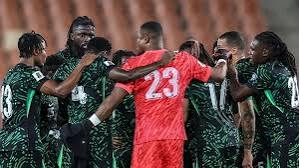
Nigeria’s 2026 FIFA World Cup dream didn’t end with a dramatic fightback or a moment of brave defiance. It ended with a penalty kick that sliced through the net behind Stanley Nwabali—and through the spirit of a nation long accustomed to demanding excellence while tolerating mediocrity. In Rabat, the Super Eagles fell 4–3 on penalties to a determined DR Congo after a tense 1–1 draw, confirming a second consecutive World Cup absence and triggering the kind of national soul-searching that Nigerian football can no longer afford to postpone.
Frank Onyeka’s early third-minute strike should have ignited a ruthless push toward qualification. Instead, it became the beginning of Nigeria’s undoing. The Super Eagles slipped into lethargy, surrendering initiative and allowing DR Congo to settle. The Leopards, driven by unmistakable hunger, equalized through Meschack Elia in the 32nd minute and never looked back.
What followed for the next 120 minutes was a study in contrasts—talent versus tenacity, reputation versus hard work. Nigeria, with its roster of Europe-based stars, played with worrying sluggishness: slow transitions, limp pressing, and indecisive play in the final third. DR Congo, meanwhile, treated every duel as if their World Cup lives depended on it—because they did. Every tackle was charged with conviction, every sprint chased to exhaustion, every defensive intervention celebrated. The difference in desire was glaring, and ultimately, decisive.
The halftime withdrawal of Victor Osimhen—injured, frustrated, but always influential—exposed Nigeria’s long-standing overreliance on a single player. Before his exit, Osimhen’s presence alone forced Congo’s defenders into caution. Without him, the Super Eagles’ attack became predictable, flat, and uninspired. Akor Adams and Toluwalase Arokodare worked hard but never imposed themselves. The midfield lost verticality. The frontline played in disjointed fragments. It was here, in Osimhen’s absence, that the nation’s bitter joke resurfaced: that Nigeria has become “Osimhen FC”—a team too dependent on one man to navigate high-pressure football.
But to blame only the players is to miss the broader, deeper fault line. This defeat is as much administrative as it is athletic. The NFF’s chronic instability—poor planning, unresolved bonus issues, inefficient logistics, and coaching uncertainty—has gradually eaten away at the professionalism and stability needed for a World Cup campaign. A team distracted by administrative firefighting cannot consistently deliver maximum intensity on the pitch. The rot behind the scenes inevitably appears between the lines.
Missing the 2026 World Cup is more than a footballing setback; it is a national alarm bell. Consecutive failures on the biggest stage reflect a regression in the continent’s most storied football nation. Beyond the emotional sting lies a hard truth: Nigeria is drifting.
The way forward demands structural reconstruction. The team needs more than a new coach—it needs an identity, a disciplined culture, and a consistent playing philosophy that doesn’t hinge on the availability of its star striker. Above all, Nigerian football desperately needs an administration capable of providing stability, long-term planning, and the professional environment required for success.
Until these foundations are rebuilt, the Super Eagles will remain what they have unfortunately become: a gifted collection of individuals repeatedly undone by the very system meant to elevate them watching, once again, as the world’s biggest football stage unfolds without them.
By Chikezie Queen Chioma