


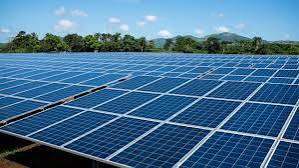
Nigeria has emerged as Africa’s second-largest importer of solar panels as residents and businesses increasingly turn to renewable energy to cope with the country’s costly and unreliable electricity supply.
Data from energy think tank Ember shows that between July 2024 and June 2025, Nigeria imported 1,721 MW of solar panels, surpassing Egypt and trailing only South Africa. Across the continent, solar panel imports grew by 60 per cent year-on-year, hitting a record 15,032 MW compared to 9,379 MW in the previous period.
The report noted that the high cost of electricity under the new band ‘A’ billing system and a 400 per cent hike in fuel prices have made solar a more affordable alternative to diesel generators. In Nigeria, a 420-watt solar panel costing about $60 can pay for itself in less than six months by offsetting diesel expenses.
South Africa maintained its lead in solar imports during its 2023 power crisis, while Algeria ranked third with 1,199 MW. Other countries, including Zambia, Botswana, Sudan, Liberia, Benin, Angola, and Ethiopia, also posted sharp increases in imports.
Ember highlighted that most of Africa’s solar panels came from China, which accounted for 80 per cent of global production in 2024. Chinese manufacturers, facing oversupply at home, have increasingly targeted African markets, where over 600 million people still lack electricity access.
The report added that many of the imported panels are set to replace diesel generation, helping to reduce oil imports and reshape Africa’s energy mix. Research by Wood Mackenzie previously found that Nigeria, Ghana, and Kenya have more diesel generator capacity than grid power plants.
“Africa’s solar surge reflects both urgent needs and new opportunities. Beyond replacing diesel, solar has the potential to deliver cleaner, cheaper, and more reliable electricity to drive economic growth,” Ember stated.