


Nigeria’s quest for fuel self-sufficiency remains far from reality, as crude imports by the Dangote Refinery and petrol importation by the country surged in the first half of 2025.
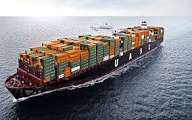
Data from the National Bureau of Statistics (NBS) released Sunday showed that Nigeria spent N4.06 trillion on petrol imports between January and June, while the Dangote Refinery imported about 60 million barrels of crude oil from the United States and other countries.
Speaking at the West African Refined Fuel Conference in Abuja in July, the refinery’s President, Aliko Dangote, disclosed that the facility buys between 9 million and 10 million barrels of crude monthly from international markets. He attributed the reliance on foreign crude to inconsistent domestic supply and the Nigerian National Petroleum Company Limited’s (NNPC) focus on exports to earn foreign exchange.
NBS figures revealed that petrol imports rose from N1.76 trillion in Q1 to N2.3 trillion in Q2 2025, placing the commodity among Nigeria’s top five imports, alongside wheat, gas oil, crude petroleum oils, and cane sugar. Overall, mineral fuels accounted for N4.42 trillion, or 28.95 per cent of total imports in Q2.
The situation underscores the contradiction in Nigeria’s energy sector. The 650,000 bpd Dangote Refinery—built to ensure self-sufficiency, stabilise prices, conserve foreign exchange, and make Nigeria a net exporter of refined products—has yet to ease the country’s heavy reliance on imports.
On the export side, petroleum products dominated trade to Africa in Q2, with crude petroleum oils valued at N1.26 trillion (42.5 per cent of exports), followed by jet fuel (N408.7 billion), gas oil (N404 billion), and other petroleum residues (N157.5 billion).
Trade flows also highlighted Nigeria’s dependence on Lagos ports. Apapa Port handled N17.93 trillion of exports (78.8 per cent) and N6.96 trillion of imports (45.6 per cent) in Q2, while Lekki Deep Sea Port and Tin Can Island trailed behind.
Meanwhile, Nigeria’s crude oil production fell to a five-month low of 1.43 million barrels per day (bpd) in August, a 4.7 per cent drop from July, according to OPEC’s September Monthly Oil Market Report. Despite remaining Africa’s top producer, Nigeria has only met its OPEC quota three times this year, far below the 2025 budget benchmark of 2.06 million bpd (including condensates).