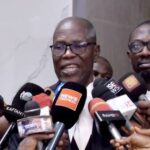



Investment banker and entrepreneur, Dr. Nnaemeka Obiaraeri, has warned that the continued marginalisation of certain ethnic groups, particularly the Igbo, poses a serious threat to Nigeria’s unity, stability, and development.
Obiaraeri made the remarks during an interview with journalist Rudolf Okonkwo on 90MinutesAfrica, where he called for a national dialogue to address what he described as deep-seated grievances among Nigeria’s indigenous peoples.
He dismissed claims that Nigeria’s unity is “non-negotiable,” arguing that sovereignty ultimately belongs to the people and that the country must be willing to renegotiate its nationhood to ensure long-term stability.
According to him, if an opinion poll were conducted in the South-East, a majority of respondents would likely favour separation from Nigeria due to persistent feelings of exclusion and unfair treatment.
Obiaraeri cited the treatment of Igbo residents in Lagos as an example, despite their significant contributions to the city’s economic growth. He said Igbo investors played a major role in transforming Lagos into Nigeria’s commercial hub.
He specifically noted that Igbo investors own a substantial number of properties in Banana Island, which he said was developed from a swamp into one of the country’s most exclusive residential areas through private investment.
Obiaraeri questioned why political leaders, despite benefiting from such economic contributions, pursue policies he said alienate rather than empower productive groups.
“It is counterproductive for any leader to marginalise people who have demonstrated capacity to contribute meaningfully to economic development,” he said.
Beyond ethnic and unity concerns, Obiaraeri also criticised Nigeria’s governance and investment environment, citing lack of transparency, weak institutions, and disregard for the rule of law as major deterrents to both local and foreign investment.
He referenced the petroleum sector, noting that although Nigeria built its first refinery in 1965, international oil companies have been unwilling to invest in refining capacity in the country due to institutional weaknesses.
He added that some multinational oil firms operate refineries in countries without crude oil reserves but have declined similar investments in Nigeria.
Obiaraeri called for a return to what he described as the original constitutional and fiscal principles agreed upon by Nigeria’s founding fathers, stressing that meaningful reforms are necessary to address disunity, economic stagnation, and declining trust in governance.
He said Nigeria’s long-term survival depends on an inclusive national restructuring that ensures fairness, accountability, and equitable distribution of power and resources.