


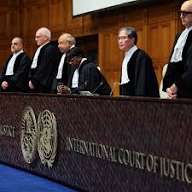
The International Court of Justice (ICJ), the United Nations’ principal judicial body, will on Wednesday deliver an advisory opinion clarifying Israel’s legal obligations toward the UN and other humanitarian organisations operating in Gaza and the West Bank.
The opinion, requested by the UN General Assembly in December 2024, is expected to address broader questions about the protection and facilitation states must provide to UN personnel and humanitarian workers globally. While advisory opinions are not legally binding, they carry considerable political and moral weight, often shaping international law and diplomatic norms.
The case stems from persistent tensions over aid access to Gaza, where Israel has faced accusations of obstructing humanitarian relief operations. In April, UN lawyers and Palestinian representatives accused Israel of violating international law by blocking aid deliveries between March and May. Although some relief has since been permitted, UN officials insist it remains insufficient to prevent a deepening humanitarian crisis.
Under a recent US-brokered ceasefire plan, up to 600 aid trucks are now allowed into Gaza daily. However, Israel maintains that Hamas diverts humanitarian supplies, a claim the group denies, saying the restrictions are a form of collective punishment. Israel chose not to attend the ICJ hearings but submitted a written defence. Foreign Minister Gideon Saar dismissed the proceedings as a “circus,” alleging the court was being politicised.
The UN’s request for an advisory opinion followed Israel’s 2023 law banning UNRWA—the UN’s Palestinian refugee agency—from operating within its territory. Israel alleged that several UNRWA staff were involved in the October 7, 2023 Hamas attacks, which left hundreds dead. The UN later confirmed the dismissal of nine staff members over alleged involvement, while one—identified as a Hamas commander—was killed in Gaza in October 2024.
Earlier this year, the ICJ had declared Israel’s occupation of Palestinian territories unlawful, calling for its immediate end. The new ruling, expected by 3 p.m. (1300 GMT), could further test the reach of international law and the global community’s resolve to uphold states’ obligations under it.