

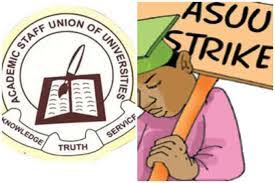
Nigeria’s public universities face the threat of another strike by the Academic Staff Union of Universities (ASUU), with unresolved grievances dating back to the 2009 FGN-ASUU Memorandum of Understanding. Over the past 15 years, inflation has eroded lecturers’ salaries, while successive administrations have failed to fully implement agreed terms, resulting in low morale, declining productivity, and repeated strikes.
Between 2009 and 2022, Nigerian students lost more than three academic sessions due to prolonged industrial actions, some lasting eight to nine months. President Bola Tinubu had promised during his campaign that ASUU strikes would not occur under his administration. Despite this, ASUU threatened an indefinite strike from Friday, citing unaddressed issues, including earned academic allowances, university revitalization, and salary reviews.
The editorial highlights that Nigerian professors remain among the lowest paid in Africa, earning between N500,000 and N700,000 monthly, compared with South African counterparts who earn about N7.18 million. Meanwhile, the government continues to fund initiatives like the Nigerian Education Loan Fund and establish new universities, even as existing institutions face dilapidated facilities.
Globally, Nigeria spends less than 7% of its annual federal budget on education, far below South Africa’s 19% and Ghana’s 18–20%. The country ranks 191 out of 208 countries on the World Top 20 Global Education Index and has 20 million out-of-school children—the second largest globally. Recurrent strikes exacerbate this crisis, increasing vulnerability for female students and pushing male students into crime or menial labor.
The editorial calls on the Federal Government to honor the 2009 agreement, pay owed academic allowances, and prioritize university revitalization. It warns that failing to do so risks further brain drain, declining research output, and a weakened higher education system, undermining Nigeria’s future development.