

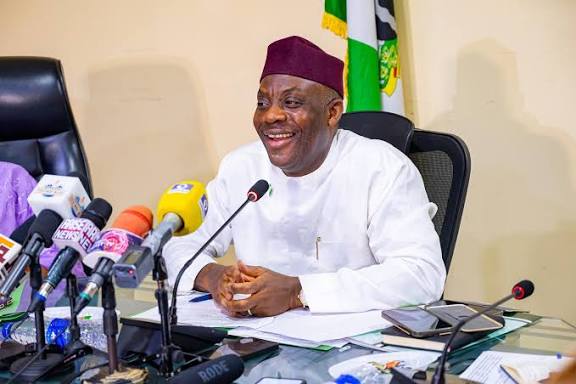
Nigeria’s education sector recorded mixed fortunes in 2025, with several government policies drawing both criticism and commendation from stakeholders.
During the year, the Federal Government clashed repeatedly with unions in the university system, particularly the Academic Staff Union of Universities (ASUU), although some agreements were eventually reached. Key developments in the sector included the introduction of a new secondary school curriculum, the cancellation of the mother tongue policy in basic education, the decision to make technical education free, the renegotiation of the 2009 ASUU agreement, and the suspension of plans to conduct final external senior secondary examinations using computer-based tests (CBT).
The introduction of a new curriculum for secondary schools at the start of the 2025/2026 academic session generated controversy, with critics arguing that students were being compelled to take subjects they had not previously studied. The Senate subsequently began probing the policy and summoned the Minister of Education, Dr Tunji Alausa, and relevant agencies, insisting that the matter must be resolved to protect students’ academic futures.
The probe followed a motion by Senator Sunday Karimi (APC, Kogi West), who described the policy shift as abrupt and poorly prepared. He noted that the new guideline required SS3 students to adopt a curriculum originally scheduled to take effect two years later, resulting in the removal of subjects such as Computer Studies and Civic Education from the 2026 WAEC syllabus. Lawmakers warned that many students could be left with fewer examinable subjects than required.
Former Edo State Governor and Senator Adams Oshiomhole also criticised the policy, faulting its implementation without adequate teachers, facilities or proper notification to parents and schools.
The cancellation of the mother tongue policy also attracted mixed reactions. While some experts supported the government’s position, the Babatunde Fafunwa Education Foundation argued that poor implementation, rather than the policy itself, was responsible for its shortcomings.
Another major issue was the Federal Government’s announcement that final external examinations at the senior secondary level would move to CBT mode from June 2026. The proposal faced widespread opposition from students, parents and education groups, citing inadequate infrastructure, power supply challenges and logistics concerns. Following the backlash, the policy was suspended, with the National Assembly proposing a three-year transition period to allow for adequate preparation.
Overall, developments in 2025 reflected both progress and persistent challenges in Nigeria’s education sector, with several reforms still under debate.