

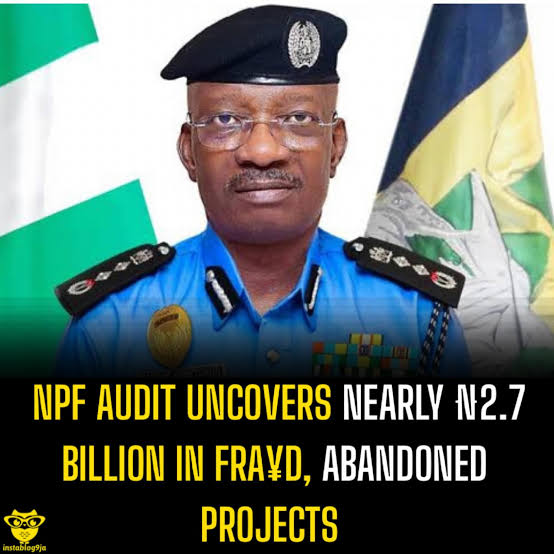
A recent audit has uncovered widespread contract irregularities, abandoned projects, and questionable payments totaling N2.69 billion within the Nigeria Police Force (NPF).
The findings, detailed in the Auditor-General’s 2022 Annual Report on Non-Compliance and Internal Control Weaknesses in MDAs, highlight extensive breaches of procurement laws and financial regulations across multiple departments at the Police Force Headquarters.
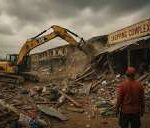
The report revealed that 14 contracts worth N1.93 billion, listed as ongoing in the 2022 budget, were abandoned. Despite this, the NPF awarded new contracts outside the approved 2022 Appropriation Act, many of which were fully paid without legislative approval.
Among the cases flagged, 12 one-bedroom transit camps and rehabilitation works at the Police Pre-retirement Skills Acquisition Centre in Kudan, Kaduna State, had 79% of the N141 million contract paid by late 2022, yet auditors found nothing built as of March 2024. Police management said the contractor had returned to the site, but auditors deemed the explanation “inadequate.”
Other irregularities include:
- N4 million paid for modifications to the IGP Conference Room.
- N499.88 million paid for Police College Phase II in Bashar, Plateau State, which was reportedly never executed.
- N112 million used to settle 2020 liabilities from 2022 funds, violating financial rules.
- N6 million spent on a Senior Special Assistant to the IGP for “revenue and tax matters” without due process.
- N10.08 million spent on equipment through direct procurement for the NPF Database Management Centre, contrary to guidelines.
- N12.9 million spent on a contract with no proper documentation.
The audit also noted weak asset management, including missing operational animals, and obsolete firearms stored without records at the Force Headquarters armoury.
The Auditor-General urged that the Inspector-General of Police recover all misappropriated funds and return them to the government treasury. The report concluded that NPF violated procurement laws, financial regulations, and proper documentation standards, stressing that corrective actions must be implemented to resolve the issues.