

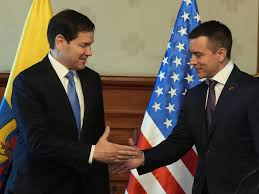
US Secretary of State Marco Rubio has vowed that Washington will use military force against foreign cartels if required, warning that the United States will “blow them up” in collaboration with allied governments.
Speaking in Ecuador on Thursday, Rubio announced that two of the country’s most violent gangs, Los Lobos and Los Choneros, will be designated as foreign terrorist organisations. He said the move is part of President Donald Trump’s strategy to confront cartels that “have been waging war on us for 30 years.”
The remarks followed a recent US airstrike in the southern Caribbean Sea that killed 11 suspected members of Venezuela’s Tren de Aragua gang. The White House described the operation as part of ongoing counter-narcotics efforts but withheld the identities of those killed.
When asked about potential unilateral action against smugglers in countries such as Mexico and Ecuador, Rubio said he expected cooperation from “friendly governments” and suggested US strikes would not be necessary in those cases. Neither Ecuador nor Mexico has publicly committed to assisting in such operations.
Legal analysts have cautioned that the Caribbean airstrike may have breached international maritime and human rights law. Tensions escalated further on Thursday after the Pentagon accused two Venezuelan military aircraft of flying dangerously close to a US vessel in what it called an attempt to disrupt anti-narcotics missions.
Alongside its tougher stance, Washington pledged $13.5 million in security aid and $6 million in drone technology to support Ecuador in combating gang violence. Ecuador has become a major hub for cocaine trafficking from Colombia and Peru, with authorities estimating that nearly 70 per cent of the world’s supply now passes through the country.
Ecuadorian President Daniel Noboa has declared a “war” on gangs and welcomed Washington’s decision to classify Los Lobos and Los Choneros as terrorist organisations. He said such recognition would strengthen international support and called on foreign militaries to join Ecuador’s campaign.
The US designation will allow authorities to freeze gang-related assets, share intelligence with Ecuador, and take potentially lethal action against group members. However, experts warn the move could complicate asylum claims by Ecuadorians fleeing gang violence, as victims forced to pay extortion fees may be accused of providing “material support” to terrorists.
Washington’s new approach highlights growing US concerns over drug trafficking, rising violence, and migration pressures linked to Ecuador, which officials now frame as national security challenges.