


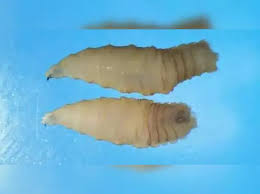
The United States has confirmed its first human case of travel-associated New World screwworm, a flesh-eating parasite, in a patient who recently returned from El Salvador.
The Department of Health and Human Services (HHS) said on Sunday that the case was verified by the Centers for Disease Control and Prevention (CDC) on August 4 in collaboration with the Maryland Department of Health. HHS spokesman Andrew G. Nixon stressed that “the risk to public health in the United States from this introduction is very low.”
Screwworms are parasitic flies whose larvae burrow into the flesh of warm-blooded animals, causing potentially fatal infestations if untreated. Human cases are extremely rare.
The development has raised concerns in the livestock sector, as the parasite has been spreading northward from Central America and southern Mexico. The US Department of Agriculture (USDA) estimates a major outbreak could cost Texas — the nation’s largest cattle producer — about $1.8 billion in livestock losses, labour, and treatment costs.
Federal officials have faced criticism from state veterinarians and industry groups for limited transparency. South Dakota’s state veterinarian, Beth Thompson, said her office only learned of the Maryland case “via other routes” before confirming details with the CDC.
The patient has reportedly received treatment, and containment measures have been introduced in Maryland.
To curb the spread, Agriculture Secretary Brooke Rollins announced plans for a sterile fly production facility in Texas. Mexico, which reported new screwworm cases in July, is also constructing a $51 million facility. Currently, the only sterile fly plant is in Panama, with a weekly capacity of 100 million flies — far below the 500 million the USDA says are needed to push the pest back toward South America.
The parasite was eradicated in the US in the 1960s through mass releases of sterilised male flies, but its resurgence since 2023 has renewed fears of an outbreak. Mexico recently confirmed a case just 370 miles south of the US border, prompting livestock trade restrictions at southern entry points.
Livestock traders warn that any perception of a US screwworm outbreak could disrupt cattle markets already under pressure, with the national herd at its lowest level in 70 years.