

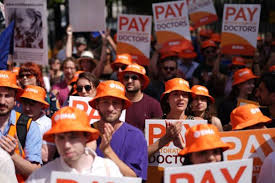
Thousands of junior doctors in the United Kingdom began a five-day strike early Friday, following the breakdown of negotiations with the Labour government over a new pay deal.
Doctors formed picket lines outside hospitals, including University College Hospital in central London, after last-minute talks on Thursday failed to yield an agreement. The walkout, organized by the British Medical Association (BMA), marks a continuation of ongoing industrial action to demand better pay and working conditions.
The strike comes despite doctors previously accepting a 22.3 percent pay rise over two years in September, shortly after Prime Minister Keir Starmer’s Labour Party came to power. However, junior doctors—those below consultant level—argue that their real-term pay has declined by over 21 percent since 2008.
“We’re not working 21 percent less hard, so why should our pay suffer?” said Melissa Ryan and Ross Nieuwoudt, co-chairs of the BMA’s junior doctors committee, in a joint statement.
Prime Minister Starmer on Friday urged the doctors to reconsider, warning that the strike could put patients at risk and further strain the already overstretched National Health Service (NHS). Writing in The Times, Starmer stated, “Launching a strike will mean everyone loses… Our NHS and your patients need you. Lives will be blighted by this decision.”
Health Secretary Wes Streeting also called on doctors to return to work, stating in The Telegraph that the government could not afford further pay increases this year.
Last year’s strikes by doctors led to the cancellation of tens of thousands of appointments and delays in treatment. The dispute is one of several that have affected the UK’s public sector in recent years, including similar actions by teachers and train drivers over inflation-related pay concerns.