


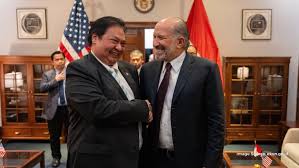
The United States has finalized a major trade agreement with Indonesia, averting the threat of higher tariffs after a series of intense, last-minute negotiations.
President Donald Trump confirmed the deal on Tuesday, stating it would expand U.S. exports while preserving Washington’s leverage over trade violations, particularly involving transshipment.
As part of the agreement, a 19% tariff will now apply to Indonesian imports—lower than the 32% tariff Trump had previously threatened to implement by August 1. The compromise followed direct discussions between Trump and Indonesian President Prabowo Subianto.
“Indonesia has agreed to purchase $15 billion worth of U.S. energy, $4.5 billion in agricultural goods, and 50 Boeing aircraft, including several 777 models,” Trump announced via his Truth Social platform.
The deal also introduces stricter measures against transshipment, designed to prevent Indonesian exports from being routed through third countries to evade tariffs. Violations will face additional penalties.
Despite the scale of the announcement, Boeing stock remained unchanged, and several key details—such as the timeline for the tariff implementation and schedule for Indonesia’s purchases—remain unclear.
The Indonesia agreement is part of Trump’s broader tariff strategy launched in April, which initially introduced a 10% levy on most trading partners and threatened sharper increases. Since then, the administration has postponed harsher tariffs, shifting deadlines from July 9 to August 1.
Trump also revealed plans to notify smaller countries of their updated tariff rates, suggesting a general rate of “a little over 10%.” He noted that a separate trade deal with Vietnam was “pretty well set,” although specific terms have not yet been disclosed.
The administration had earlier pledged to deliver 90 trade deals in 90 days, but has so far finalized formal agreements with only a handful of countries, including the United Kingdom, Vietnam, and now Indonesia, in addition to a tariff de-escalation pact with China.
Speaking at a Foreign Policy event, Dino Patti Djalal, former Indonesian Vice Minister for Foreign Affairs, said Jakarta was broadly satisfied with the terms, viewing the agreement as a fair compromise under significant U.S. tariff pressure.
Analysts say the deal benefits both countries: Indonesia retains key access to the U.S. market, while Trump secures another “America First” trade win ahead of looming deadlines.
With further negotiations reportedly underway with India, the European Union, Japan, and South Korea, Trump hinted more deals may be announced soon.
“We have a Vietnam deal, and I would say that that deal is being pretty well set,” he told reporters at Joint Base Andrews, suggesting a series of upcoming trade developments.
As the August 1 deadline draws near, attention is now turning to how other nations will respond—either by accepting the administration’s terms or facing the risk of escalating U.S. tariffs.