


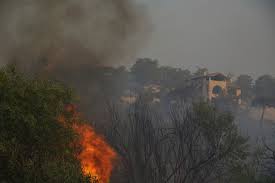
A massive wildfire sweeping through southern Cyprus has left two people dead and forced hundreds to evacuate, as soaring temperatures and strong winds fuelled the blaze that continues to threaten communities.
The fire broke out midday Wednesday in a wine-producing region north of Limassol, a coastal city, and has since scorched more than 100 square kilometres (39 square miles) of land. By Thursday morning, firefighting aircraft resumed operations after being grounded overnight, with several fire fronts still active.
Authorities confirmed the discovery of two bodies inside a burned vehicle, believed to have been trapped while fleeing the flames. At least ten others have been injured, with two in serious condition, police said.
A red haze hovered over Limassol at dawn, as smoke and ash clouded the skyline of a city where recent development has encroached into surrounding mountain areas. The full scale of destruction is still being assessed, and the cause of the fire remains unknown.
Fire brigade spokesperson Andreas Kettis said the firefighting effort has been hampered by erratic, gusty winds. “We are talking about very strong winds, with gusts, which were constantly interchanging,” he noted.
The wildfire struck during an extreme heatwave, with temperatures reaching 43°C (109.4°F) on Wednesday — triggering an amber weather alert. Forecasts warned of even hotter conditions on Thursday, with temperatures expected to rise to 44°C, the highest so far this year.
Cyprus has appealed for international help through the European Union’s civil protection mechanism. Spain is expected to dispatch two firefighting aircraft, while Jordan has also pledged assistance, according to government spokesperson Konstantinos Letymbiotis.
The fire comes as the island endures a prolonged drought. Water levels at the Kouris reservoir — Cyprus’s largest — stood at just 15.5% capacity on Wednesday. The fire-affected zone lies directly north of the reservoir, raising further concern over the environmental impact.
Efforts to contain the blaze are ongoing, with emergency teams working around the clock to prevent further spread as high temperatures and dry conditions persist.