

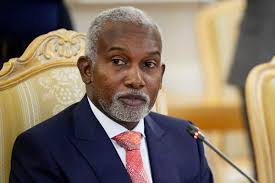
Minister of Foreign Affairs, Yusuf Tuggar, has expressed concern over Africa’s low level of intra-continental trade, which he said accounts for only 18 per cent despite a combined Gross Domestic Product (GDP) of $2.8 trillion.
Speaking on Thursday at the 2025 Gender Inclusion Summit organised by the Policy Innovation Centre (PIC) in Abuja, Tuggar said women, who dominate the informal sector, remain largely excluded from the benefits of formal trade. The summit had the theme: “From Aid to Investment: Leveraging Economic Diplomacy for Africa’s Inclusive Development.”
“Africa stands at the cusp of transformation with a population projected to hit 2.5 billion by 2050. Yet, women, who make up 70 per cent of the informal economy, continue to be sidelined,” he said.
Quoting UNESCO’s 2024 report, the minister noted that 7.6 million Nigerian girls remain out of school, with the Northwest and Northeast accounting for nearly half of that figure. He also highlighted that women hold just 27.3 per cent of parliamentary seats across Africa, while in Nigeria, female representation in the National Assembly is only 4.2 per cent.
Tuggar referenced a 2019 Council on Foreign Relations (CFR) report predicting that Nigeria’s GDP could rise by 23 per cent — about $229 billion — if women participated in the economy at the same level as men.
“These statistics highlight the urgent need to address gender disparities. Growth without inclusivity is fragile, and prosperity without equity is unsustainable,” he said.
The minister explained that Nigeria’s foreign policy has been recalibrated under President Bola Tinubu’s “4-D Diplomacy Agenda” — Development, Demography, Diaspora, and Democracy — to prioritise women and youth inclusion. He cited initiatives such as the Regional Partnership for Democracy (RPD) and Nigeria’s hosting of the West Africa Economic Summit, which focused on breaking barriers to finance, markets, and cross-border trade for women.
Tuggar warned that continental trade platforms like the African Continental Free Trade Area (AfCFTA) could inadvertently marginalise women if challenges around access to finance, literacy, and networks are not addressed.
He further called for increased women’s participation in politics, stressing that 4.2 per cent representation in Nigeria’s legislature was unacceptable.
“True democracy is about equitable representation. We must dismantle systemic barriers preventing women from leadership, including legal reforms that protect their rights to property and political office,” Tuggar said.