
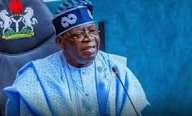
President Bola Tinubu has written to the House of Representatives seeking legislative approval for Nigeria to access the international capital market to raise a total of $2.847 billion for budget implementation, debt refinancing, and infrastructure funding.
The President’s letter, dated September 22, 2025, and addressed to Speaker Tajudeen Abbas, was submitted in line with Sections 21(1) and 27(1) of the Debt Management Office (Establishment) Act, 2003.
According to Tinubu, the proposed borrowing includes $1.229 billion in new external loans to finance the 2025 budget deficit and $1.118 billion to refinance a maturing Eurobond issued in 2018, bringing the total to $2.347 billion. The plan also includes the issuance of a $500 million debut Sovereign Sukuk in the international market, either with or without credit guarantees.
He explained that the external borrowing component of ₦1.84 trillion, already provided for in the 2025 Appropriation Act, is vital to the implementation of national projects and the stability of Nigeria’s fiscal framework. The funds, he said, could be raised through Eurobonds, syndicated loans, bridge financing, or direct borrowing from international financial institutions.
Tinubu further stated that refinancing the $1.118 billion Eurobond—due on November 21, 2025, and issued at 7.625 percent interest—was necessary to avert default. He noted that the government would select the most cost-effective funding option, consistent with global best practices in debt management.
The President assured lawmakers that the Federal Ministry of Finance and the Debt Management Office (DMO) would work with financial advisers to secure favourable terms for the new issuance. He cited current yields on Nigeria’s Eurobonds, which range between 6.845 percent and 9.288 percent, as a guide for determining pricing.
On the proposed $500 million international Sukuk, Tinubu explained that Nigeria had successfully used domestic Sukuk instruments to raise ₦1.392 trillion between 2017 and 2025 for key road infrastructure projects. He said an international Sukuk would diversify Nigeria’s funding sources, deepen its investor base, and support infrastructure development.
The Sukuk may be issued with or without a credit enhancement from the Islamic Corporation for the Insurance of Investment and Export Credit (ICIEC), a subsidiary of the Islamic Development Bank (IsDB). If the ICIEC guarantee is accepted, 25 percent of proceeds will go toward repaying high-interest debt, while 75 percent will fund priority infrastructure projects.
Tinubu urged the House to grant expeditious approval for the borrowing plan, given its importance to fiscal and debt management timelines.
Meanwhile, the Nigerian National Petroleum Company Limited (NNPC Ltd) has responded to all 19 queries raised by the Senate Committee on Public Accounts over alleged unaccounted ₦210 trillion discrepancies in its audited financial statements for 2017–2023.
Chairman of the Committee, Senator Aliyu Wadada, confirmed on Tuesday that NNPC’s responses had been received and would be reviewed by the committee in its next sitting. He clarified that the probe was not an allegation of theft but a constitutional oversight to address audit queries raised by the Office of the Auditor-General for the Federation.
The Senate probe was launched before the lawmakers’ July recess and reconvened on July 29, during which NNPC’s Group Chief Executive Officer, Bayo Ojulari, requested time to engage internal and external auditors to clarify the discrepancies, comprising ₦103 trillion in liabilities and ₦107 trillion in assets yet to be reconciled.
In a related development, the African Development Bank (AfDB) will lend Nigeria $500 million this year as part of a $1 billion budget support programme, following economic reforms introduced by the Tinubu administration.
According to Bode Oyetunde, Nigeria’s representative on the AfDB board, the loan—expected to be approved before the end of the year—aims to support ongoing fiscal and power sector reforms.
“We are supporting Nigeria’s bold macroeconomic reforms. They requested $1.5 billion, but we are providing $1 billion over two years—$500 million last year and another $500 million this year,” Oyetunde said.
He added that the AfDB’s support is in recognition of Nigeria’s efforts to stabilize its economy through fuel subsidy removal, foreign exchange unification, and tax reforms.
Meanwhile, the World Bank has projected that Sub-Saharan Africa’s economy will grow by 3.8 percent in 2025, up from 3.5 percent in April, driven by easing inflation and stable exchange rates. The Bank’s Africa Pulse report noted that growth could accelerate to an average of 4.4 percent over the next two years, with Nigeria, Ethiopia, and Ivory Coast among countries expected to record improved performance.
However, it warned that high debt levels and inadequate job creation remain major risks, urging governments to focus on policies that promote private investment and sustainable employment for the region’s growing youth population.