

Nigeria and several developing countries are grappling with the fallout of massive cuts in Official Development Assistance (ODA) from traditional donor nations, with impacts already visible in fiscal constraints and humanitarian programmes, particularly emergency food relief in the North-East.
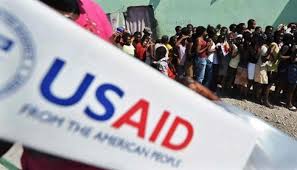
The strain follows a directive issued by US President Donald Trump during his second inauguration on January 20, 2025, halting medical aid for HIV, malaria, tuberculosis, and newborn health for an initial 90 days in USAID-supported countries, including Nigeria.
According to the Mo Ibrahim Foundation, USAID froze 23 per cent of its programmes in Nigeria as of March 27, representing 0.05 per cent of Gross National Income (GNI). Between 2015 and 2024, the US provided $7.8 billion in foreign aid to Nigeria, supporting healthcare, security, and economic development. But as of May 7, only 891 of the 6,256 USAID global programmes—worth $69 billion—remained active, a steep fall from $120 billion in January.
Africa as a whole received $42 billion out of the $212 billion global ODA in 2024. In the same year, the US contributed 20.7 per cent of Africa’s total foreign aid.
A new Mo Ibrahim Foundation report, “Demystifying Africa’s Dependence on Foreign Aid,” noted that Sub-Saharan Africa remains the region most dependent on aid, with net ODA as a share of GNI rising from 2.83 per cent in 2000 to 2.95 per cent in 2022. The figure briefly peaked at 3.94 per cent in 2020 during the COVID-19 pandemic, before trending downward again.
Finance Minister and Coordinating Minister of the Economy, Wale Edun, disclosed recently that Nigeria recorded negative ODA flows in the first half of 2025, as repayments and debt servicing outpaced inflows. “Overseas development assistance flow is negative. More developing countries are paying back more in debt servicing than they are receiving. That has clearly constrained the fiscal space,” he said.
Preliminary data shows cumulative ODA across all donor countries fell by 7.1 per cent in 2024, the first drop after five years of growth. Analysts largely attributed the decline to increased allocations to Ukraine.
Germany, Africa’s second largest bilateral donor after the US, cut €3 billion ($3.1 billion) in ODA between 2023 and 2025, a 10.5 per cent reduction. France slashed its 2025 development aid budget by €1.2 billion ($1.4 billion), 18.6 per cent lower than 2024. The UK also reduced aid by 6.5 per cent, from £15.3 billion in 2023 to £14.3 billion in 2025.
The cuts have already disrupted critical humanitarian services. The World Food Programme (WFP), which had supported 1.3 million displaced people and others in hard-to-reach areas of North-East Nigeria, was forced to shut down over half of its nutrition clinics. The US, formerly WFP’s largest donor, has withdrawn support, while the EU and UK have also diverted funds to security concerns linked to Russia’s war in Ukraine.
In response to the funding squeeze, global voices have urged African countries to rethink their development model. WTO Director-General Ngozi Okonjo-Iweala warned that reliance on traditional donors is no longer sustainable. “Some traditional donors have lost faith in the conviction that our future prosperity and their future prosperity go hand in hand. The world as we know it has changed for aid, trade and development. These shifts present challenges, but also opportunities for Africa to move forward and deliver better,” she said.
The federal government has announced plans to increase domestic funding for healthcare, but observers warn that other sectors, including food security, remain highly vulnerable amid the global aid retrenchment.