


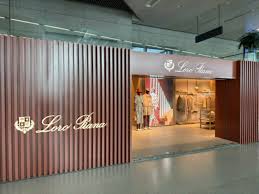
Luxury cashmere brand Loro Piana, owned by French conglomerate LVMH, has been placed under judicial administration by an Italian court, becoming the fifth high-end fashion house in the country to face such scrutiny amid a widening investigation into labour abuses in the luxury supply chain.
According to a 26-page court ruling seen by Reuters, Loro Piana SpA will be subject to judicial monitoring for one year. The decision is part of a broader probe launched in 2023 examining the outsourcing practices of Italy’s luxury fashion sector, which authorities allege is linked to worker exploitation.
Other major brands placed under similar judicial supervision include Valentino, Dior (LVMH’s second-largest brand), Giorgio Armani, and handbag label Alviero Martini.
The Milan court found that Loro Piana had outsourced production through two intermediary companies that lacked actual manufacturing capacity. These firms subsequently subcontracted work to Chinese-owned workshops in Italy, where investigators allege workers faced exploitative conditions.
LVMH, the world’s largest luxury group, acquired an 80% stake in Loro Piana in 2013, with the founding family retaining 20%. In June 2025, Frederic Arnault—son of LVMH Chairman and CEO Bernard Arnault—was appointed CEO of the brand.
In its findings, the court ruled that Loro Piana had “culpably failed” to monitor its supply chain effectively, choosing instead to prioritise cost-cutting and profitability over labour oversight.
While Loro Piana is not facing criminal charges, the subcontracting entities are under investigation by Milan prosecutors for worker exploitation and employing undocumented labour.
Neither Loro Piana nor its parent company, LVMH, have issued a public response to the court ruling.
The Milan court noted a broader pattern within the industry, stating that “the complete outsourcing of industrial production processes is aimed exclusively at reducing labour costs,” and also helps luxury brands avoid liability for worker safety breaches.
It concluded that such subcontracting models have become a “generalised and consolidated manufacturing method” within Italy’s luxury fashion landscape.