

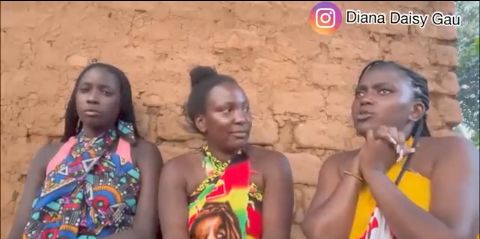
Daina Daisy a Lady from Nairobi Kenya takes a trip to Baganda Uganda, for a documentary discovery about Labia Elongation practice.
On Diana Daisy’s YouTube channel, one of her most thought-provoking documentaries takes us deep into a cultural tradition that many outside Uganda may find surprising, controversial, or even hard to understand yet to some Baganda women, it remains a sacred and respected part of growing up.
The video focuses on the age-old practice of labia elongation, a rite of passage that still exists within specific communities, quietly passed down from generation to generation.
In the documentary, we hear from women some elders, some younger who speak openly and with pride about the practice.
According to them, labia elongation is not a form of mutilation or abuse, but rather a symbol of maturity, femininity, and preparation for womanhood and marriage.
It is considered by many of them to be an empowering journey one that encourages discipline, patience, body awareness, and closeness among women.
In the Baganda culture, this tradition isn’t seen as something shameful or forced.
It’s taught with care by older women, usually aunts or grandmothers, who guide the young girls through the process over time.
The process involves using herbal pastes and manual stretching techniques, done gently and gradually often starting before adolescence and continuing until marriage.
These teachings come with conversations about marriage, sexuality, respect, and hygiene. It’s more than a physical modification it’s a culturally significant mentorship.
One of the most powerful statements in the video comes from a woman who says, “Our mothers didn’t just teach us how to stretch they taught us how to carry ourselves with pride, how to honor our bodies, and how to keep our homes. It was never just about sex. It was about being prepared.
Yet, this documentary doesn’t pretend that the practice exists in a vacuum.
Diana Daisy skillfully addresses the friction between cultural heritage and modern values.
In a globalized era where women’s bodies are a political battleground and cultural traditions are constantly scrutinized, labia elongation sits at a complex intersection. Western feminist lenses might categorize it as outdated or problematic, especially when introduced to minors but within these Ugandan communities, many women see it as a cherished part of their identity, not something to be ashamed of.
The video raises deeply important questions:
1: Can traditional practices exist without being oppressive?
2: Is it possible to honor cultural customs while still advocating for bodily autonomy and informed consent?
3: And who really gets to define what is “empowering” for a woman outsiders, or the women themselves?
The documentary acknowledges that the practice is no longer as widespread as it once was, and that many young Ugandans today are either unaware of it or choose not to continue it.
Yet in some Baganda households, the tradition is very much alive, practiced with discretion and pride.
Ultimately, Diana Daisy doesn’t tell viewers what to think.
Instead, she presents the voices of the women themselves their stories, beliefs, and lived experiences and lets those narratives stand on their own.
This is not a sensational exposé, but a respectful, raw glimpse into a cultural world where traditions still matter deeply.
It reminds us that culture isn’t frozen in time it evolves, but it also resists. And in the case of labia elongation, it shows that for some African women, empowerment doesn’t always look the way the world expects it to. Sometimes, it’s hidden in the quiet teachings of grandmothers, in the rituals passed from woman to woman, and in the bodies they choose to claim for themselves.