


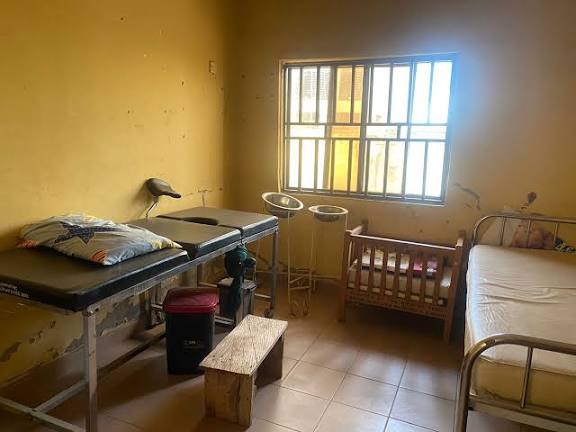
A major healthcare crisis is unfolding in Anambra State, where at least 55 Primary Healthcare Centres (PHCs) across 16 local government areas are operating with fewer than five government-employed health workers. The situation, documented through Orodata Science’s CheckMyPHCs portal, raises serious concerns about access to essential services, including maternal care and emergency response.
A review of 66 PHCs listed on the portal showed that most facilities are run by between one and four government-paid workers, while others rely on volunteers or personnel hired by Officers-in-Charge. The shortages, attributed to years of underfunding and stalled recruitment, have left many rural communities without adequate medical support, with some centres staffed by only one health worker or community health extension worker.
According to the data, none of the PHCs or health clinics visited across the 16 LGAs met the minimum staffing standard required by the National Primary Health Care Development Agency (NPHCDA), which mandates at least 12 workers for a primary health clinic and 24 for a PHC.
Communities in Awka North, Awka South, Onitsha North, Onitsha South, Orumba North, Njikoka, Oyi, Idemili South, Ihiala, Anaocha, Aguata, among others, were found to be severely understaffed. In some locations, one worker is responsible for thousands of residents and multiple communities.
Residents expressed frustration over the impact of the shortages. A woman in Oyi LGA described her community PHC as “a building without workers,” saying emergency cases at night often go unattended because the only nurse on duty does not live nearby.
An official of the Anambra State Primary Health Care Development Agency confirmed the manpower deficit, saying many centres operate “below minimum operational standards.” The official noted that although the state has initiated recruitment efforts, more urgent action is needed to attract and retain health workers, especially in rural areas.
In September, the state government interviewed Junior Community Health Extension Workers and Assistant Community-Based Health Workers as part of an effort to deploy at least 10 workers to each ward. However, experts say the intervention is insufficient to meet the scale of shortages documented in PHCs across the state.
Health specialists warn that the crisis could undermine gains in maternal health, routine immunisation, and disease surveillance. Public health expert Dr. Cosmas Bright said understaffed PHCs cannot provide 24-hour services or manage outbreaks effectively. Another analyst, Dr. Halima Kazeem, linked the situation to poor remuneration and migration of skilled health professionals.
The report was produced by Sunday Elom and Abdulwasiu Olokooba, with research support from Africa Data Hub and Orodata Science.