

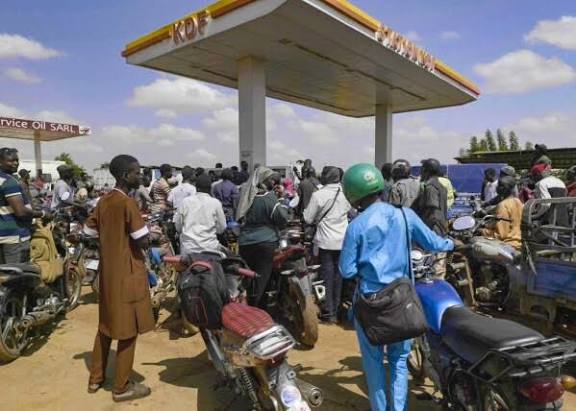
Long queues stretched across gas stations in Bamako, the capital of Mali, on Tuesday as residents scrambled for fuel amid a worsening shortage caused by a blockade of fuel imports by militants affiliated with al-Qaida.
The blockade, launched in early September by Jama’at Nusrat al-Islam wal-Muslimin (JNIM), has crippled fuel supplies, leaving commuters and businesses stranded. Bakary Coulibaly, a roadside petrol vendor, said sourcing fuel had become nearly impossible. “It is only a few stations that have it,” he lamented.
At several filling stations, vehicles and motorcycles formed long, chaotic lines as frustrated residents argued and fought for access to the limited supply available.
Despite the chaos, Douga Barry, a motorcycle taxi driver, expressed resilience. “We know we are at war, and we are ready to endure it. Even if we have to walk, we are prepared,” he said.
The JNIM militants have intensified attacks on tanker convoys traveling from Senegal and Ivory Coast, cutting off vital supply routes to the landlocked West African nation. The fuel disruption has worsened economic hardship in Bamako, where prices of goods and transportation have surged.
Though Mali is one of Africa’s leading gold producers, it remains among the world’s poorest nations, with nearly half of its population living below the poverty line.
Analysts warn that the fuel blockade could further destabilize Mali’s fragile economy and erode public confidence in the military junta, which took power in 2021 promising to restore security. Instead, attacks by al-Qaida and Islamic State-linked groups have increased in recent months.
A recent report by the Malian Petroleum Importers Association revealed that more than 100 fuel tankers had been torched by JNIM fighters.
In response, the Malian army has begun escorting fuel convoys between Bamako and the borders with Senegal and Ivory Coast. The military announced on Monday that it had destroyed JNIM hideouts linked to a recent convoy attack in Kolondiéba, near the Ivorian border, as efforts continue to restore fuel supplies and stability.