


Inspector General of Police, Kayode Egbetokun, has warned that cattle theft, once seen as a rural nuisance, has evolved into a complex criminal economy that fuels terrorism, destabilises communities, and enables the trafficking of dangerous materials.
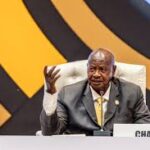
Speaking on Wednesday at the 27th INTERPOL African Regional Conference in Cape Town, South Africa, Egbetokun said the Sahel and West Africa host more than 60 million head of cattle, representing billions of dollars in assets that are increasingly exploited by criminal and extremist groups.
In a paper titled “Cattle Theft in West Africa: A Conduit for Terrorism Financing and CBRNE Threats,” the IGP explained that rustling has shifted from opportunistic crime to an organised industry, with stolen cattle laundered through informal markets and converted into quick cash for insurgents and bandits.
“To understand the scale: a single raid of 200 cattle, each fetching around $300 in illicit sales, generates about $60,000 overnight. This is not just stolen wealth — it is quick, liquid capital for crime and conflict,” he said.
Egbetokun noted that extremist groups across Mali, Burkina Faso, the Lake Chad Basin, and North-West Nigeria fund recruitment, weapons purchases, and improvised explosive devices (IEDs) through cattle theft. He said Boko Haram and ISWAP, for instance, impose “cattle taxes” and resell stolen herds via middlemen.
He further warned that cattle rustling also poses risks linked to chemical, biological, radiological, nuclear, and explosive (CBRNE) materials. According to him, illegal livestock movements facilitate the spread of zoonotic diseases such as anthrax and brucellosis, which extremists could weaponise. The same smuggling routes, he added, are identified by the International Atomic Energy Agency (IAEA) as high-risk corridors for trafficking illicit radioactive material.
“The linkage between cattle rustling, terrorism financing, and CBRNE threats cannot be ignored. It is far more than a rural crime — it is a multiplier of global security threats,” the police chief stressed.