

The World Bank has praised Nigeria’s Renewed Hope Ward Development Programme, describing it as a critical step in turning recent macroeconomic reforms into tangible benefits at the grassroots level.
The programme, which targets all 8,809 wards nationwide, is designed to stimulate economic activity, boost food security, create jobs, and reduce poverty by directly supporting at least 1,000 economically active citizens in each ward.
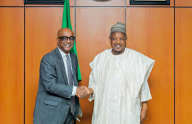
The commendation came from the new World Bank Country Director, Mr. Matthew Verghis, during his first official engagement with the Minister of Budget and Economic Planning, Senator Abubakar Bagudu, in Abuja on Thursday.
Verghis described Nigeria’s recent reforms as a “development breakpoint,” noting that while the decisions were difficult, they could reset the nation’s economic trajectory. He said the World Bank would provide both technical and financial support to strengthen implementation, drawing on lessons from India, China, and Kenya.
“We understand the objectives are jobs, prosperity, and inclusion,” Verghis said. “For the poorest, immediate support is needed; for the youth, opportunities for productivity; and for the nation, a pathway to sustained growth.”
Bagudu explained that the ward-level initiative is a transformative, bottom-up strategy aimed at boosting rural economies and achieving President Bola Tinubu’s $1 trillion GDP target by 2030. He added that the plan, recently approved by the National Economic Council, will map economic opportunities in every ward while ensuring federal, state, and local governments share responsibility for its execution.
The minister said Nigeria had drawn lessons from China’s poverty reduction, India’s rural transformation, and Kenya’s bottom-up economic approach but would implement a model suited to its federal structure. He also linked the programme to Nigeria Agenda 2050, the country’s long-term development framework.
Meanwhile, the Central Bank of Nigeria (CBN) reiterated its confidence in the macroeconomic outlook, saying its recent decision to cut the Monetary Policy Rate (MPR) by 50 basis points would support growth without weakening the naira.
Dr. Victor Oboh, CBN’s Director of Monetary Policy, said the cut would ease borrowing costs for households and businesses, especially SMEs, while Nigeria’s strong reserves, stable exchange rate, and foreign inflows would help sustain currency stability.
He added that other measures, including a new 75 per cent Cash Reserve Ratio (CRR) on non-TSA public deposits, would control excess liquidity and tame inflation. According to him, households may not feel the immediate impact, but lower lending rates would eventually reduce production costs and consumer prices.
The CBN noted that its policies are aligned with global trends, with several central banks, including the US Federal Reserve and Bank of Ghana, also cutting rates to stimulate growth.
Bagudu thanked the World Bank for its continued support, saying its partnership had been crucial during Nigeria’s economic reforms. He stressed that the government remains committed to sustaining reforms, boosting inclusive prosperity, and ensuring that “no willing Nigerian is left behind.”