

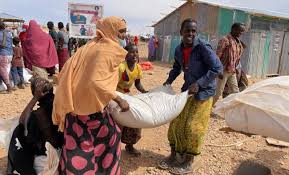
The United Nations World Food Programme (WFP) has announced the suspension of emergency food and nutrition assistance for 1.3 million people in North-East Nigeria due to a critical funding shortfall.
The suspension, set to take effect by the end of July, comes amid rising insecurity and record levels of hunger in the region. In a statement on Thursday, WFP’s Country Director for Nigeria, David Stevenson, warned that without an urgent injection of $130 million, the agency would be unable to continue its operations through the end of 2025.
“Nearly 31 million people in Nigeria are now facing acute hunger – the highest number ever recorded. At the same time, WFP’s operations in the North-East will collapse without immediate and sustained funding,” Stevenson stated.
He stressed that the situation has evolved beyond a humanitarian crisis, describing it as a growing threat to regional stability as desperation grows among vulnerable families with nowhere to turn.
According to the statement, WFP’s food and nutrition supplies have already run out, with the last stock distributions taking place in early July. Without fresh funding, life-saving assistance will cease once the current round is completed.
The agency warned that the impact will be especially severe for children. Over 150 WFP-supported nutrition clinics across Borno and Yobe states are expected to close, ending treatment for more than 300,000 children under the age of two and putting them at risk of acute malnutrition.
WFP also highlighted the worsening security situation in the region, where violent attacks by extremist groups have triggered widespread displacement. More than 2.3 million people have fled their homes across the Lake Chad Basin, placing additional strain on already overstretched resources.
Stevenson cautioned that the end of emergency aid could push many to migrate in search of food and safety, while others may resort to desperate survival strategies, including recruitment by insurgent groups.
“Food assistance can often prevent these outcomes. It enables us to feed families, support recovery, and help stabilize fragile communities,” he said.
In the first half of 2025, WFP provided critical support to 1.3 million people across northern Nigeria and had planned to extend assistance to another 720,000 in the second half of the year. However, the funding crisis has placed these plans in jeopardy.
The agency reaffirmed its readiness and capacity to scale up humanitarian operations but said the lack of funding was crippling its ability to respond.