


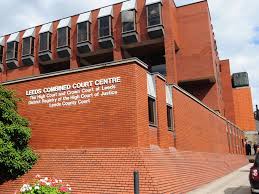
A High Court in Leeds has ordered that a Nigerian baby girl, smuggled into the UK by a woman who falsely claimed to be her mother, be placed for adoption and granted British nationality and a new identity.
The ruling follows a complex investigation involving false documents, fabricated stories, and international inquiries. The woman at the center of the case—identified only by the pseudonym Susan—was arrested by Sussex Police at Gatwick Airport in 2024 after arriving with an infant referred to as Eleanor. DNA tests later confirmed that neither Susan nor her husband were biologically related to the child.
Susan had been residing in West Yorkshire since June 2023. Before travelling to Nigeria in early June 2024, she had informed her GP that she was pregnant and intended to give birth in her home country. However, medical scans and tests in the UK revealed no pregnancy. Instead, doctors discovered a tumor suspected to be cancerous, which Susan declined to treat.
Despite medical evidence, she insisted she was pregnant, telling her employer: “My babies are always hidden,” and claiming her past pregnancies lasted up to 30 months and were undetectable by ultrasound.
Upon returning to the UK with the baby, Susan claimed to have delivered Eleanor in Nigeria. Her doctors, unconvinced, alerted social services, leading to Susan’s arrest. Eleanor was taken into foster care, and DNA testing again confirmed no biological connection between the child and the couple.
Susan then changed her story, claiming she conceived through in-vitro fertilisation using donor materials before arriving in the UK. She submitted documents from a Nigerian hospital claiming she had given birth there, along with photos and videos of a woman in a delivery room. However, the footage did not show her face, and one graphic image—depicting a woman with an umbilical cord still attached—could not be verified as Susan.
The court dispatched veteran social worker Henrietta Coker to Nigeria to verify Susan’s claims. Coker found no record of any IVF treatment in the hospital Susan had cited. Staff there said the documents were forged. At the alleged birthing facility, Coker described the location as “a shabby, three-bedroom flat” staffed by teenagers dressed as nurses. The doctor who allegedly signed the birth certificate denied Susan was ever his patient and speculated that the child may have been bought.
Coker was unable to identify Eleanor’s true origins but relayed suspicions that the baby may have been voluntarily surrendered or trafficked.
Further evidence emerged from Susan’s phone, which had been seized during the investigation. The device contained messages to a contact saved as “Mum oft sic Lagos Baby.” In one message, sent weeks before the claimed birth, Susan asked: “Good afternoon ma, I have not seen the hospital items.” The reply mentioned a “delivery drug” costing 3.4 million naira and a hospital bill of 170,000 naira. The texts were set to auto-delete, which investigators cited as proof of an illicit baby purchase.
Susan attempted to explain the messages, but the judge described her testimony as “difficult to follow and impossible to accept.”
In a scathing judgment, the deputy High Court judge ruled: “Susan and her husband constructed a fundamental lie to conceal how Eleanor came into their care. They tried to mislead authorities with forged documents, causing the child emotional and psychological harm.”
Despite pleas from the couple, who claimed Eleanor had become “a fundamental part of their family unit,” the judge made a formal declaration of non-parentage and ordered that the child be placed for adoption. The ruling grants Eleanor a new legal identity and British citizenship.
The case bears similarities to a separate incident in April, when UK Border Force officials intercepted another Nigerian couple attempting to bring in a baby—later identified as Lucy—who was also not biologically related to them.