

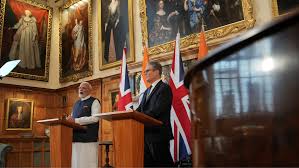
British Prime Minister Sir Keir Starmer and Indian Prime Minister Narendra Modi have signed a landmark £6 billion free trade agreement aimed at strengthening economic ties and boosting trade between the United Kingdom and India.
The deal, announced at a formal signing ceremony at Chequers, the UK Prime Minister’s official country residence, will see major tariff cuts on a wide range of goods, including UK exports like cars, whisky, lamb, gin, medical devices, and aerospace components. In return, Indian products such as textiles, jewellery, and electric vehicles will enter the UK at reduced costs.
Negotiated over three years, the agreement also outlines new cooperation on illegal migration, defence, education, and technology. A bilateral plan will facilitate intelligence sharing, support travel bans, and help prosecute crimes including corruption, serious fraud, and organised crime.
Prime Minister Starmer described the agreement as a “historic day for both of our countries,” stating: “This deal is now signed, sealed, delivered. Our landmark trade deal with India is a major win for Britain—putting more money in the pockets of hardworking Brits and helping families with the cost of living.”
According to UK government estimates, the deal is expected to generate an additional £4.8 billion annually for the British economy and create over 2,200 new jobs, particularly in sectors such as aerospace, advanced manufacturing, and technology.
Key tariff changes include a reduction in whisky duties to India from 150% to 75%, with a further drop to 40% by 2035. Tariffs on other UK goods will fall from an average of 15% to 3%. Indian electric and hybrid vehicle manufacturers will gain greater access to UK markets.
A controversial provision in the deal extends national insurance exemptions for Indian and British workers temporarily posted abroad. While Indian officials celebrated this as a major win, critics warned it could disadvantage domestic workers. However, UK Business Secretary Jonathan Reynolds dismissed those concerns, stating: “There is no tax advantage for hiring an Indian worker over a British worker. Visa and NHS surcharge fees still apply, making overseas hires more expensive.”
Currently, the UK has similar social security arrangements with 17 countries, including the US, EU states, and South Korea.
The deal has passed Indian cabinet approval but still awaits parliamentary ratification in both countries and is not expected to take effect for at least a year.
This marks Prime Minister Modi’s fourth visit to the UK since taking office in 2014. His trip follows the 2023 UK-India Technology Security Initiative, which expanded cooperation in telecommunications and emerging technologies.
The trade agreement was first initiated under former UK Prime Minister Boris Johnson in 2022. Shadow Business Secretary Andrew Griffith credited Brexit as a key enabler of the deal, but warned Labour’s domestic economic agenda could undermine its gains. “Any benefits from this deal could be wiped out by Labour’s union charter and inevitable tax hikes,” Griffith said.
Despite some unresolved issues—such as limited access to India’s financial and legal services sectors and ongoing talks over a bilateral investment treaty—the deal is being hailed as a significant milestone in UK-India relations and a potential model for post-Brexit trade diplomacy.