

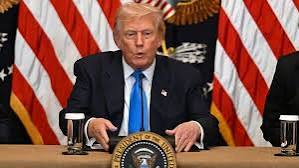
President Donald Trump on Wednesday announced that the United States will impose a reduced 15% tariff on imports from South Korea — down from a previously threatened 25% — as part of a newly negotiated trade agreement aimed at easing tensions with one of America’s key Asian allies and top trading partners.
The announcement came after a high-level meeting between Trump and South Korean officials at the White House, as part of a series of trade policy decisions ahead of Trump’s self-imposed August 1 deadline for finalizing tariff changes.
South Korea, a major exporter of semiconductors, automobiles, and steel, had faced the risk of a steep 25% tariff before Wednesday’s deal was reached.
“I am pleased to announce that the United States of America has agreed to a Full and Complete Trade Deal with the Republic of Korea,” Trump wrote on his social media platform, Truth Social.
The agreement also serves as a significant diplomatic milestone for newly elected South Korean President Lee Jae Myung, who took office in June following a snap election. In a Facebook post, Lee hailed the deal for removing uncertainty in the export environment and securing tariff rates that are “lower than or at the same level as major competitors.”
“We have crossed a big hurdle,” President Lee added.
Trump confirmed that Lee is expected to visit the White House within the next two weeks for their first official face-to-face meeting.
Under the terms of the deal, South Korea will invest $350 billion in U.S.-based projects selected by the Trump administration and has agreed to purchase $100 billion worth of American energy products. Trump also announced that South Korea will lift import duties on U.S. automobiles and agricultural goods, expanding market access for American industries.
However, South Korean officials clarified that domestic rice and beef markets will remain protected and said that negotiations are ongoing regarding U.S. demands for changes to food safety regulations.
The agreement is being viewed as a strategic win for both sides, strengthening economic ties while de-escalating potential trade friction at a time of heightened global economic uncertainty.