

President Bola Tinubu on Friday pledged to scale up local production of arms and ammunition as part of efforts to strengthen Nigeria’s security architecture and reduce reliance on foreign suppliers.
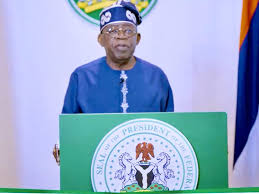
Speaking in Abuja at the graduation ceremony of Course 33 of the National Defence College (NDC), Tinubu—represented by Vice President Kashim Shettima—said enhancing indigenous defence manufacturing was key to sharpening the country’s fight against insecurity and driving national development.
He commended the college’s research culture, describing its Presidential Treatise on Harnessing Indigenous Manufacturing for Enhanced National Security and Development: Strategic Options for Nigeria by 2040 as evidence of the institution’s excellence. He directed relevant stakeholders to study the recommendations to support government’s push for homegrown defence capabilities.
Tinubu also hailed the course theme, Strengthening Institutions for National Security and Development in Nigeria, stressing that resilient institutions remain the foundation of democracy, stability, and good governance. “They uphold the rule of law, safeguard citizens’ rights, promote accountability, and deliver essential services,” he said.
The President reiterated his administration’s commitment to building strong institutions, repositioning the economy, and sustaining reforms that have improved investor confidence. He noted that the stock market had grown by more than 48 per cent year-on-year, its best performance in nearly three decades, but acknowledged the need to tackle inflation and food insecurity to ensure growth translates into real prosperity.
Tinubu further assured that government would complete the permanent site of the National Defence College in Piwoyi, Abuja, and work towards upgrading it into a Defence Postgraduate University. He directed the Commandant and the Minister of Defence to develop a clear strategy to improve the college’s infrastructure.
Addressing the graduands, the President urged them to support his administration’s Renewed Hope Agenda and apply the skills acquired in tackling emerging threats, including global economic challenges, cybersecurity risks, and instability in the region.
He commended the Commandant, Rear Admiral J.O. Okosu, and the faculty for training personnel from the Armed Forces, security agencies, and allied nations. Okosu had earlier highlighted the college’s role in addressing national security challenges such as banditry and oil theft.
Deputy Commandant, Major General Kevin Ukandu, said participants were trained in defence management, strategy formulation, command, and geopolitics, equipping them for high-level roles in military, civil, and international service.
Graduates of Course 33 include officers from the Nigerian Army, Navy, Police Force, and representatives from other local and foreign institutions.