

The Federal Government has commenced discussions with the Japanese Government for a $238 million loan to strengthen Nigeria’s national electricity grid, with particular focus on the transmission segment.
The negotiations formed part of deliberations at the Ninth Tokyo International Conference on African Development (TICAD 9) in Yokohama, Japan, where President Bola Tinubu participated in high-level engagements on power and infrastructure.
In a statement issued by his spokesman, Bolaji Tunji, Minister of Power, Chief Adebayo Adelabu, confirmed that talks were held with key Japanese firms, including Toshiba, Hitachi, Japan’s Transmission & Distribution Corporation, and Energy Exchange corporations. The discussions centred on transmission infrastructure, operational efficiency, and strategies to reduce system losses.
“These engagements build on the recent Federal Executive Council (FEC) approvals for counterpart funding of N19.08 billion to facilitate a $238 million loan from the Japan International Cooperation Agency (JICA),” the minister stated.
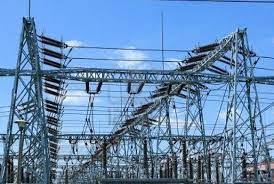
The loan, according to him, will finance the expansion of the grid with the construction of 102.95km of new 330kV double circuit lines, 104.59km of new 132kV double circuit lines, four 330/132/33kV substations, two 132/33kV substations, two 330kV line bay extensions, two 132kV line bay extensions, and a 132kV substation.
Adelabu also disclosed that Nigeria is advancing a $190 million renewable energy loan facility supported by JICA, aimed at scaling up distributed renewable energy solutions in underserved communities. The initiative complements the recently launched $750 million World Bank–backed Distributed Access through Renewable Energy Scale-up (DARES) programme under the Mission 300 Compact, which targets electricity access for over 17 million Nigerians.
He further revealed that three substations, funded by JICA through a $32 million grant, would soon be commissioned in Apo (FCT), Keffi (Nasarawa State), and Apapa (Lagos State), to enhance supply reliability to households, industries, and critical facilities such as the Lagos Port.
Additionally, the partnership with JICA has enabled the National Power Training Institute of Nigeria (NAPTIN) to acquire state-of-the-art equipment in Abuja, designed to train distribution engineers, curb network losses, and build local expertise for long-term sector sustainability.
Speaking during a panel session titled “HICKARE Africa: Harnessing Innovation, Co-creation, and Knowledge for Accessible and Resilient Energy for Africa,” Adelabu noted that only 55–60 per cent of Nigeria’s population currently has electricity access, much of which is unreliable. He said the government is working to expand grid supply in urban areas while accelerating solar mini-grids and standalone systems for rural and peri-urban communities.
While acknowledging challenges such as limited access to affordable capital and cost barriers for rural households, Adelabu reaffirmed government’s resolve to tackle these obstacles through supportive policies, private-sector partnerships, and local manufacturing of renewable energy components.
He expressed appreciation to JICA and the Japanese Government for their consistent support, describing the agency as a reliable partner in Nigeria’s energy transition and in expanding access to affordable and sustainable electricity.