


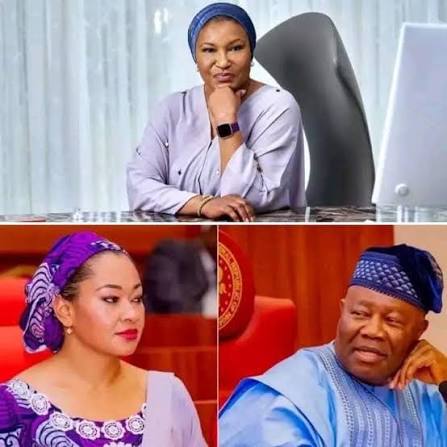
When the Nigerian Senate recently debated the plight of Nigerian women in Libyan prisons, the chamber experienced a notable silence not from male senators, but from the women lawmakers expected to champion the cause.
On October 14, Senator Natasha Akpoti-Uduaghan (Kogi Central) moved a motion calling on the government to intervene in cases of abuse and sexual exploitation of Nigerian female inmates in Libya. She urged her colleagues to direct the Nigerian Immigration Service to work with Libyan authorities for the repatriation and rehabilitation of the victims.
However, when Senate President Godswill Akpabio requested a seconder, none of the female senators supported the motion. The silence persisted until Senate Leader Opeyemi Bamidele (Ekiti Central) stood to second the motion, preventing it from stalling.
Observers see the moment as emblematic of a broader issue of women’s representation and solidarity in Nigerian politics. Currently, the 10th Senate, inaugurated in June 2023, has only four female senators out of 109 members (3.7%), while the House of Representatives includes 17 women out of 360 (4.7%). Overall, women make up less than 5% of the National Assembly, among the lowest representation rates in sub-Saharan Africa. By contrast, Rwanda’s parliament has 61% women, South Africa 46%, and Senegal 43%.
Political analyst Dr. Suliman Aliu noted, “The issue is not just numbers; it’s the will to act when it matters. Representation means little if it doesn’t translate into advocacy.”
Among the four female senators Sen. Ireti Kingibe (FCT, Labour Party), Sen. Idiat Adebule (Lagos West, APC), Sen. Ipalibo Banigo (Rivers West, PDP), and Sen. Natasha Akpoti-Uduaghan (Kogi Central, PDP)—only Akpoti-Uduaghan has consistently raised motions addressing women’s rights, gender-based violence, and support for vulnerable citizens.
Civil society activist Mrs. Lilian Brendan described the silence as a reflection of disconnect between women in power and grassroots women. She also highlighted a decline from eight female senators in the 9th Senate (2019–2023) to four in the current assembly, signaling a regression in political inclusivity.
Meanwhile, Nigerian women continue to show solidarity and leadership in other sectors, from entrepreneurship to social advocacy, underscoring a contrast with the political sphere. Gender advocates are calling for accountability among female politicians and structured support systems for women aspiring to leadership roles ahead of the 2027 elections.
“If women in beauty pageants can rise for one another across nationalities, what excuse do women in power have for remaining silent when their own are suffering?” Lagos-based gender advocate Mrs. Tolu Abisogun asked.
The episode serves as a reminder that the fight for women’s inclusion in governance is not only about numbers in office but also about amplifying the voices of the marginalized.