

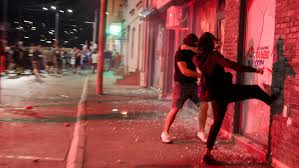
Serbia has entered its fifth straight night of unrest, with anti-government protests spreading across major cities and turning increasingly violent.
In Valjevo, masked demonstrators set fire to offices of the ruling Serbian Progressive Party (SNS), prompting riot police to respond with stun grenades and tear gas. Videos circulating online, which have not been independently verified, appeared to show officers beating a man, sparking renewed allegations of police brutality. The Interior Ministry has denied the claims.
The protests, which began after a deadly railway station collapse in Novi Sad last November that killed 16 people, have grown into nationwide demonstrations accusing President Aleksandar Vučić’s government of corruption, negligence, and authoritarianism. Initially peaceful, the movement has swelled to hundreds of thousands demanding early elections and systemic reforms.
Tensions escalated this week following counter-rallies by pro-government loyalists. Offices and flags of Vučić’s SNS party have become frequent targets, while protesters also attacked the Serbian Radical Party headquarters, a coalition partner of the ruling party.
International concern is rising. Council of Europe human rights commissioner Michael O’Flaherty condemned what he described as “disproportionate force” by police, urging Serbian authorities to end arbitrary arrests and ease tensions.
Vučić has rejected demands for early elections, describing the protests as “foreign-backed attempts” to remove him. In a statement posted on Instagram, he called the unrest “an expression of total weakness” and vowed to “punish the bullies.”
Russia, a close ally, has declared support for Vučić, with its Foreign Ministry defending Serbian police actions as “lawful methods” against “violent mobs.”
The demonstrations, now the most serious challenge of Vučić’s 12-year rule, have shifted from public grief over the Novi Sad tragedy to a broader revolt against corruption and governance. With protests intensifying and global scrutiny mounting, Serbia faces the prospect of prolonged instability.