

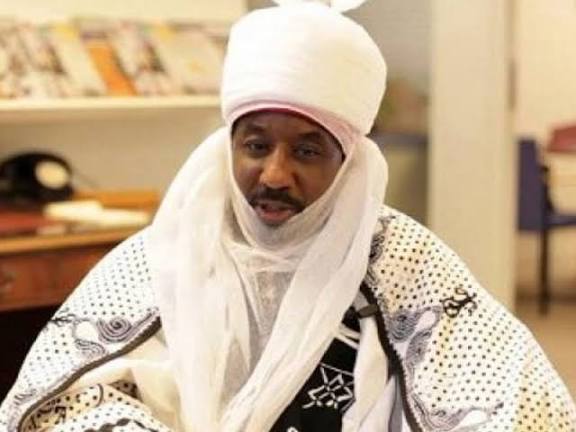
The Emir of Kano, Muhammadu Sanusi II, has revealed that former President Goodluck Jonathan suspended the 2012 fuel subsidy removal not because of nationwide protests but due to fears that Boko Haram insurgents could target demonstrators with suicide bombings.
Speaking at the Oxford Global Think Tank Leadership Conference themed “Better Leaders for a Better Nigeria,” Sanusi who was then the Governor of the Central Bank of Nigeria (CBN) and a strong advocate for subsidy removal explained that the policy had become unsustainable and economically damaging.
He described the so-called fuel subsidy as a “naked hedge,” not a true subsidy. According to him, “The government told Nigerians they would not pay more than a fixed amount per litre, regardless of global oil price fluctuations. As oil prices, exchange rates, and interest rates rose, the government absorbed the difference an arrangement that eventually bankrupted the country.”
Sanusi said that by 2012, Nigeria had begun borrowing not only to pay subsidies but also to service debts incurred for that purpose. He argued that if the Jonathan administration had succeeded in removing the subsidy at the time, Nigeria’s economic pain would have been far less than what citizens are enduring today.
On why Jonathan compromised, Sanusi disclosed: “The only reason the government backed down and implemented a partial removal was Boko Haram. With thousands protesting in Lagos, Kano, and Kaduna, security officials feared that if a suicide bomber struck the crowd, the crisis would escalate beyond subsidy issues. To his credit, President Jonathan was determined to act, but the security risks were too high.”
The Emir also used the forum to criticize Nigeria’s political elite, describing the country as “classless,” with many leaders lacking values and surrounding themselves with sycophants. “By the time you become a governor, you should be beyond seeking wealth. Leadership should be about serving people, not amassing riches,” he said.
He lamented that many public officials ignore their education and integrity once in office, choosing instead to praise superiors rather than offer honest counsel.
Also speaking at the event, entrepreneur and founder of Stanbic IBTC Bank, Atedo Peterside, faulted political leaders for turning governance into an avenue for “state capture and corruption.” He commended the current administration for removing the fuel subsidy and unifying exchange rates but insisted that the real test lies in how the additional revenue is used. “What is the point of giving thieves more money if they’ll only steal it?” he asked.
Former Director-General of the Nigerian Stock Exchange and conference convener, Arunma Oteh, emphasized the need for “long-term, patient capital” to finance infrastructure and support small businesses. She noted that Nigeria invests only 4–5% of its GDP in infrastructure compared to China’s 24%, urging an increase to at least 12%.
On his part, the Minister of Finance and Coordinating Minister of the Economy, Wale Edun, said Nigeria’s leadership transition in 2023 had brought economic reforms aimed at stabilizing growth and improving citizens’ welfare. He added that the government is implementing a transparent system to deliver direct cash payments to 15 million households to cushion the impact of subsidy removal.