

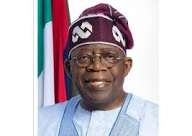
The House of Representatives has approved President Bola Tinubu’s request to borrow $2.35 billion to finance part of the 2025 budget deficit.
The lawmakers also granted approval for the issuance of a $500 million debut sovereign sukuk in the international capital market to fund infrastructure projects and diversify Nigeria’s sources of financing.
The approval followed the consideration of the report of the House Committee on Aids, Loans, and Debt Management during Wednesday’s plenary.
Under the new borrowing plan, the House endorsed the implementation of external loans totaling ₦1.84 trillion (equivalent to $1.23 billion at the budget exchange rate of ₦1,500 to $1), as contained in the 2025 Appropriation Act, to help finance the ₦9.27 trillion budget deficit.
Earlier this month, President Tinubu wrote to the National Assembly seeking approval for the loans in line with Sections 21(1) and 27(1) of the Debt Management Office (Establishment) Act, 2003, which mandates legislative consent for new borrowings and refinancing arrangements.
According to the President, the funds would be raised through a combination of instruments such as Eurobonds, loan syndications, or bridge financing facilities, depending on prevailing market conditions.
Tinubu stated that the pricing of the proposed Eurobonds would align with current yields on Nigeria’s existing bonds, estimated between 6.8 and 9.3 percent depending on maturity.
On the $500 million sovereign sukuk, the President explained that the initiative aims to attract new investors, deepen Nigeria’s securities market, and fund critical infrastructure.
He added that 25 percent of the sukuk proceeds might be used to refinance high-cost existing debt, while the remainder would be directed toward key infrastructure projects across the country.
Tinubu also noted that the Federal Government had raised over ₦1.39 trillion through domestic sukuk issuances between 2017 and 2025 for major road and infrastructure developments, and that the external sukuk would complement those efforts.
The approval marks a key step in implementing the external financing component of the 2025 Appropriation Act and is part of the administration’s broader fiscal strategy to strengthen foreign reserves, stabilize the naira, and sustain infrastructure growth amid increasing debt obligations.