


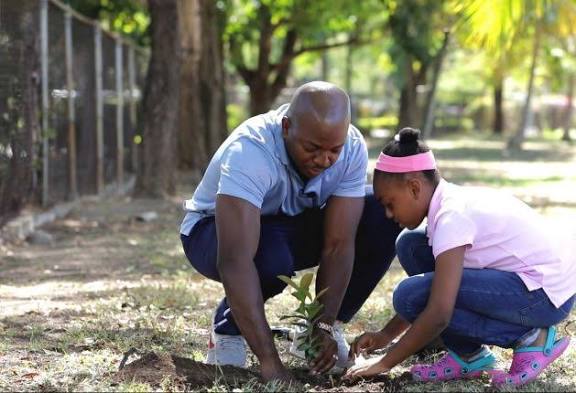
In my hometown in Enugu State, southeastern Nigeria, we were raised to believe that nature is sacred. As children, our grandmothers told us that certain trees should never be cut down because spirits lived there, and that rivers must be respected because they give life.
Those stories might have sounded like myths, but behind them lay an ancient environmental truth: our culture once taught us to live in harmony with nature.
Today, that balance is fading.
Across many Igbo communities, cultural values that once protected the environment are being lost to modernization and neglect. The result is visible in the dried-up streams, deforested hills, and unstable weather patterns that now threaten the livelihoods of thousands especially women, who depend on the land for survival.
Culture and Climate: The Missing Link
Culture shapes how people interact with their environment. In the past, traditional Igbo societies had taboos and practices that served as unwritten environmental laws.
In some communities in Nsukka and Nkanu, specific days such as Eke or Orie were sacred market or rest days when farming or tree-felling was forbidden. These breaks allowed the soil to recover naturally.
Similarly, sacred groves, known as Ogba Ndi Mmụọ, were preserved as community forests. They stored biodiversity, regulated rainfall, and provided medicinal plants.
But today, most of these practices have disappeared. The groves have been cleared for timber, sacred days are ignored, and modernization has replaced caution with consumption.
According to the Nigerian Conservation Foundation (2023), Nigeria loses about 350,000 hectares of forest every year, with the southeast among the regions worst affected. This rapid deforestation worsens flooding and soil erosion, both of which are now common in parts of Enugu and Ebonyi States.
Women are the hardest hit. As the farmlands degrade, they walk longer distances to fetch firewood or water, spend more on food, and lose valuable time for education or small businesses.
When Culture Becomes a Solution
Yet, the same culture that has been eroded can also become the foundation for climate solutions. The answer lies not in abandoning tradition but in reviving and modernizing it.
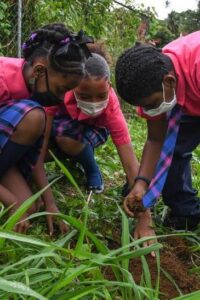
In Awgu Local Government Area, for instance, a women’s cooperative I visited last year began a small project rooted in traditional values. They revived a cultural tree-planting festival known as Iwa Ji Ohuru – originally a celebration of the new yam harvest – and expanded it to include planting fruit trees around schools and churches.
One of the women, Mama Felicia, told me:
“We realized our mothers always celebrated the land after harvest, but we were not giving back to it. Now, we plant as we celebrate.”
This blending of culture and climate awareness created not just environmental change but also community pride. Children learned native songs about trees, while elders shared stories of how forests once protected their ancestors.
These initiatives show that climate action becomes truly sustainable when it grows from people’s cultural roots.
Promoting Climate Action Through Cultural Renewal
To strengthen the bond between culture and climate action in southeastern Nigeria, several steps are necessary:
1. Revive Traditional Environmental Practices:
Local governments and cultural leaders should collaborate to restore indigenous conservation days and reestablish community forests (Ogba). These traditional systems can complement modern environmental protection policies.
2. Integrate Climate Messages into Festivals:
Cultural events like the New Yam and Mmanwu (Masquerade) festivals can be reimagined as platforms for climate awareness, using dance, drama, and storytelling to pass messages in culturally relevant ways.
3. Empower Women as Cultural and Climate Custodians:
Women’s groups are central to cultural preservation. By training and supporting rural women in sustainable farming, renewable energy, and reforestation, we can amplify their roles as guardians of both culture and the environment.
4. Promote Indigenous Climate Education:
Schools should integrate local proverbs, folktales, and traditional ecological knowledge into climate education. When young people understand the wisdom in their culture, they are more likely to protect their environment.
A Return to Our Roots
As an Enugu-born journalist and climate advocate, I have come to believe that the fight against climate change must begin with a return to our roots. Western science and technology are important, but the local wisdom embedded in our songs, taboos, and stories can teach us how to live sustainably.
When we plant trees during cultural festivals, revive sacred groves, and teach our children that “the earth is our mother,” we are not only preserving our heritage we are building resilience for the future.
Culture is not the past; it is our pathway to a greener tomorrow.
Because for us in Enugu, climate action is not just about saving the planet, it’s about saving who we are.
And perhaps, if we can once again dance, sing, and celebrate the land, maybe- just maybe – the land will begin to sing back to us.
Nzubechukwu Eze