

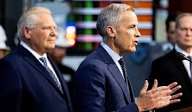
Ontario Premier Doug Ford has announced a temporary halt to the province’s controversial anti-tariff advertising campaign in the United States following President Donald Trump’s sudden withdrawal from trade talks.
The campaign’s television ad, which aired over the weekend during Major League Baseball World Series broadcasts, will be paused starting Monday to allow space for negotiations to resume. Sponsored by the Ontario government, the ad featured clips from a 1987 speech by former U.S. President Ronald Reagan, warning that tariffs “hurt every American.”
President Trump sharply criticized the ad on his Truth Social account, calling it “FAKE” and “egregious,” accusing Ontario of selectively using Reagan’s image and words. The Ronald Reagan Presidential Foundation also condemned the ad, saying it misrepresented Reagan’s message and had been used without permission.
Defending the campaign, Ford said its goal was to “start a conversation about the kind of economy Americans want to build” and to draw attention to how U.S. tariffs have affected Ontario’s industries. “We’ve achieved our goal, having reached U.S. audiences at the highest levels,” he said.
The ad has sparked debate in Canada over Ford’s confrontational strategy. Ontario—home to Canada’s auto manufacturing base—has been hit particularly hard by U.S. sector-specific tariffs, including a 50% levy on metals and 25% on automobiles. Canada currently remains the only G7 country without a trade deal with the United States since Trump’s tariff policies took effect.
While Prime Minister Mark Carney has preferred a more diplomatic, negotiation-based approach, Ford has taken a tougher stance, including temporarily removing U.S. liquor from Ontario shelves and threatening to restrict energy exports. His campaign was launched shortly after automaker Stellantis announced plans to relocate production from Brampton, Ontario—a move that intensified trade tensions.
Experts say the ad’s timing and tone may have created “an unnecessary distraction” amid sensitive trade discussions, though they acknowledge Ford’s intent to protect local industries. It remains unclear whether trade talks will resume soon, as President Trump has yet to respond to Ontario’s decision to pause the campaign.
Carney continues to advocate for a constructive path forward, offering trade concessions such as removing retaliatory tariffs and dropping Canada’s digital services tax while pursuing broader economic partnerships across Asia. Analysts warn, however, that Canada’s deep economic dependence on the U.S. continues to pose a long-term vulnerability, regardless of the negotiation strategy.