

Nigeria has restated its firm support for a two-state solution as the only viable path to ending the long-standing Israeli-Palestinian conflict, insisting that peaceful coexistence can only be achieved when both states enjoy full autonomy.
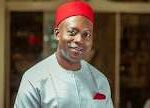
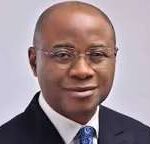
Permanent Secretary of the Ministry of Foreign Affairs, Ambassador Dunoma Umar, made this known at an event marking the 80th anniversary of the United Nations (UN) held in Abuja. He was represented by the Director of Protocol in the ministry, Ambassador Wahab Akande.
Ambassador Umar said Nigeria remains committed to global peace and multilateral diplomacy, emphasizing that “a two-state solution remains the only path to lasting peace for Israel and Palestine, where both states live side by side in peace and prosperity.”
He added that Nigeria continues to work through international platforms and within the rule of law to build consensus for peace and to deny extremists the space to incite division. “Our experience shows that this is the best, perhaps the only hope for peace, reconciliation, and the triumph of shared humanity,” he said.
The Permanent Secretary also called for comprehensive reforms at the United Nations, particularly at the Security Council, to ensure fairness and equitable representation. He noted that Nigeria’s demand for a permanent seat on the Council reflects its population growth, regional influence, and decades-long contribution to global peacekeeping.
“When the UN was founded, Nigeria was a colony of 20 million people; today, we are a sovereign nation of over 200 million — one of the youngest and most dynamic populations on earth,” Umar said. “Our case for a permanent seat at the Security Council is a demand for fairness and reform that strengthens the credibility of the multilateral system.”
Umar expressed Nigeria’s full support for the UN80 Initiative launched by the UN Secretary-General, describing it as a “bold step” toward making the global body more efficient and relevant. He stressed the need to rationalize UN structures, end duplication of roles, and enhance coherence in achieving peace and development.
Reaffirming Nigeria’s commitment to democracy, peace, and prosperity, the Permanent Secretary said the country is partnering with the UN to strengthen democratic institutions through the Regional Partnership for Democracy. He explained that the federal government has embarked on difficult but necessary economic reforms to promote sustainable growth, including the removal of subsidies and currency controls.
He also advocated for urgent debt relief measures and reforms in the international financial system, noting that such steps are essential for peace and shared prosperity across Africa. “Debt relief is not charity; it is a path to stability and growth,” he said, adding that the African Continental Free Trade Area (AfCFTA) presents new opportunities for trade, investment, and development.
On regional stability, Umar welcomed international efforts to restore peace in the Democratic Republic of Congo (DRC) and urged greater investment in Africa’s critical minerals to transform them from sources of conflict into drivers of prosperity.
“The anniversary of the UN must not be a sentimental retreat into nostalgia. It must be a moment of truth and reflection — a time to examine where we have stumbled and how we can do better,” he concluded.
In his remarks, the UN Resident and Humanitarian Coordinator in Nigeria, Mohamed Fall, praised the achievements of the UN over the past 80 years, describing it as “a home for all nations and a bridge across differences.”
He urged member states to remain united in building a shared future, noting that “our future will not be built by chance, but by choice.”
Commending Nigeria’s role as a pillar of multilateralism and regional stability since independence, Fall called on all nations to make multilateralism work “for peace, the planet, and prosperity.”
“As we look to the next 80 years, may we remember that the UN was not created to take us to heaven, but to save us from hell. We can solve today’s problems but only if we work together,” he said.