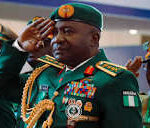


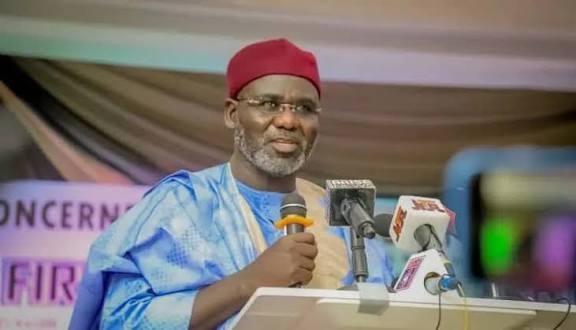
Former Chief of Army Staff, Lt. General Tukur Yusuf Buratai (rtd), has rejected claims that Nigeria is on the verge of collapse, calling such predictions “misguided” and disconnected from the nation’s resilience and potential.
In a statement titled “Nigeria: An Unbreakable Nation Rising Through Challenges,” Buratai criticized reports, including the 2011 CSAT assessment, for underestimating the capacity of Nigerian leaders and the determination of its citizens.
“Nigeria cannot and will not fail,” he declared, noting that the country has survived crises that could have toppled other nations. He credited the leadership of figures like Dr. Nnamdi Azikiwe, Sir Ahmadu Bello, Chief Obafemi Awolowo, and former military heads of state, as well as former President Olusegun Obasanjo, for laying foundations of stability.
Buratai said today’s leaders across government, civil society, business, and technology are more accountable and engaged with citizens, making the idea of national collapse “inconceivable.”
Economic Potential Remains Strong
Acknowledging current economic challenges, Buratai argued that judging Nigeria solely by its present hardships is shortsighted. He highlighted Nigeria as Africa’s largest economy, with growing influence in telecommunications, fintech, and entertainment. Key sectors such as human capital, agriculture, solid minerals, renewable energy, and the creative industry, he said, will secure future growth. He expressed confidence in ongoing diversification efforts aimed at transitioning the country to a post-oil, knowledge-driven economy.
Security Challenges Are Not Permanent
Buratai described insecurity as a temporary phase, pointing to strengthened military capabilities and the significant weakening of Boko Haram compared to 2014–2015. He also cited national infrastructure investments—railways, road projects, upgraded airports, and the Dangote Refinery—as evidence that Nigeria is building for the future rather than succumbing to crises.
The Nigerian Spirit: Resilience in Action
Highlighting the people’s resilience, Buratai recalled Nigeria’s recovery from the civil war, the economic shocks of the 1980s, pro-democracy struggles, and recent youth-led reform movements. “Our people innovate, adapt, and support one another in ways that defy every prediction of collapse,” he said.
Message to Global Partners
Buratai criticized Western analysts for “doomsday projections” and urged them to invest in Nigeria’s growth. He called for fairer trade, technology transfer, collaborative security frameworks, and more balanced global financial policies. For Nigerian leaders, he recommended promoting patriotism, accelerating economic diversification, and decentralizing security through community policing. He also encouraged African nations to pursue deeper integration under AfCFTA and share governance best practices.
“Nigeria Is Rising”
Concluding his statement, Buratai emphasized that Nigeria’s challenges are shaping a stronger future. “Nigeria’s destiny lies in the hands of Nigerians a people blessed with abundant resources and an unbreakable spirit. We will not fail. We are rising,” he said.