


One of the strongest earthquakes ever recorded struck Russia’s remote Far East on Wednesday, triggering tsunami warnings across the Pacific and prompting mass evacuations from Japan to Hawaii.
The magnitude 8.8 quake hit off the coast of Petropavlovsk in Russia’s Kamchatka Peninsula, according to the United States Geological Survey (USGS). The powerful tremor caused tsunami waves of up to four metres (12 feet) to hit the region, with authorities confirming flooding in the port town of Severo-Kurilsk and damage reported in Elizovsky district.
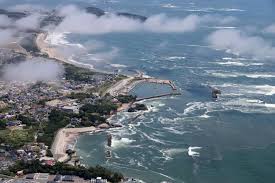
In Japan, the Meteorological Agency confirmed that a tsunami measuring 1.3 metres (4.3 feet) reached a port in Iwate prefecture around 1:52 pm local time. The agency maintained tsunami alerts, warning of potential waves up to three metres (9.8 feet) along Japan’s Pacific coast. Nearly two million people were advised to evacuate to higher ground, though no injuries or major damage had been reported by the afternoon.
Footage from Russia’s Ministry of Emergency Situations showed emergency workers evacuating residents and inspecting damaged infrastructure, including a kindergarten in Petropavlovsk-Kamchatsky. Several people sustained minor injuries in Kamchatka, while around 2,000 residents of Severo-Kurilsk were safely evacuated.
“The walls were shaking,” a Kamchatka resident told state media Zvezda. “We quickly grabbed our emergency bag and ran out… it was very scary.”
Authorities in Russia’s Sakhalin region declared a state of emergency in the northern Kuril Islands, confirming that all residents were safely evacuated.
Tsunami alerts were issued across Pacific coastlines, including the United States, Mexico, Ecuador, Chile, Japan, and several island nations. The US Tsunami Warning Center said waves exceeding three metres could affect parts of Russia, Ecuador, and the northwestern Hawaiian Islands. One- to three-metre waves were projected for Chile, French Polynesia, Costa Rica, and other Pacific territories, while smaller waves of up to one metre were expected in Australia, Colombia, Mexico, New Zealand, Tonga, and Taiwan.
In Hawaii, sirens blared across coastal areas, including Waikiki, as residents and tourists evacuated to higher ground. Honolulu Mayor Rick Blangiardi urged residents to seek safety on upper floors or away from shorelines. Governor Josh Green warned: “It’s not a regular wave. It will actually kill you if you get hit by a tsunami.”
The US issued a statewide tsunami warning for Hawaii, with the first waves projected to arrive around 7:17 pm local time. Vessels were ordered to head to open water, and government workers were sent home early as a precaution.
In Japan, security perimeters were established in coastal areas like Chiba’s Inage Beach. Although some visitors initially dismissed the warning, many quickly fled inland. Workers at the Fukushima nuclear plant — devastated by a 2011 tsunami — were evacuated as a safety measure.
Meanwhile, tsunami alerts were pushed to mobile phones in coastal areas of California, and evacuation orders were issued in places like Palau, a Pacific island nation located east of the Philippines.
Wednesday’s quake is the strongest to strike the Kamchatka region since a 9.0-magnitude earthquake in 1952, which also triggered a Pacific-wide tsunami. The region experienced at least six aftershocks, including tremors measuring 6.9 and 6.3 in magnitude.
As tsunami warnings remain in effect across the Pacific, authorities continue to urge residents and visitors to remain alert and avoid coastal areas until it is declared safe.
“STAY STRONG AND STAY SAFE!” US President Donald Trump posted on social media amid the ongoing alerts.