


Israel has expressed new concerns that Iran could attempt to recover enriched uranium buried beneath a nuclear facility damaged during last month’s U.S.-led airstrikes, a move that could reignite tensions in the already volatile Middle East.
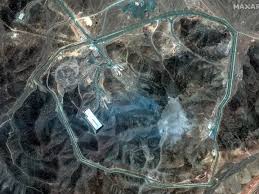
A senior Israeli official, speaking anonymously during a press briefing in Washington, said intelligence assessments suggest that enriched uranium may still be buried beneath the Isfahan nuclear site—one of three major Iranian facilities targeted during “Operation Midnight Hammer” on June 22.
While acknowledging that retrieval would be “extremely difficult,” the official warned that any attempt by Tehran to access or restore its nuclear capabilities could prompt a renewed Israeli military response.
“We would not hesitate to act if Iran attempts to reconstitute its nuclear capabilities,” the official stated.
U.S. President Donald Trump has insisted that the coordinated strikes “obliterated” Iran’s nuclear infrastructure. “The entire world is safer thanks to his decisive leadership,” White House spokeswoman Anna Kelly said in a statement, reaffirming the administration’s confidence in the mission’s success.
However, assessments within the U.S. intelligence community suggest a more nuanced reality. A leaked preliminary report from the Defense Intelligence Agency (DIA) indicated that although the Fordo, Natanz, and Isfahan sites sustained heavy damage, they were not completely destroyed. Some underground structures and chambers reportedly remain intact.
CIA Director John Ratcliffe told lawmakers in late June that the destruction of Iran’s only known site for producing metallic uranium had significantly set back its nuclear ambitions. However, he stopped short of declaring total dismantlement.
According to Israeli intelligence, the airstrikes have delayed Iran’s nuclear programme by at least two years. The senior Israeli official expressed cautious optimism, noting that any effort to retrieve material from Isfahan would likely be detected early enough to trigger a timely response.
International oversight agencies have also weighed in. Rafael Grossi, Director General of the International Atomic Energy Agency (IAEA), said the targeted facilities were “destroyed to an important degree” but advised against assuming their complete elimination.
“Frankly speaking, one cannot claim that everything has disappeared and there is nothing there,” Grossi said in an interview with CBS, urging continued inspections and global vigilance.
Iran maintains that its nuclear programme is strictly for peaceful energy purposes and denies any ambition to build nuclear weapons.
In a recent interview with U.S. conservative commentator Tucker Carlson, Iranian President Mahmoud Pezeshkian admitted that the nuclear facilities were “severely damaged” and currently inaccessible. “Therefore, we don’t have any access to them,” he said, adding that a full damage assessment was still pending due to ongoing recovery challenges.
While the airstrikes appear to have dealt a major blow to Iran’s nuclear programme, analysts caution that the situation remains unpredictable. Any perceived effort by Tehran to rebuild or retrieve radioactive material could risk renewed conflict.
“The situation remains fluid,” said a Western diplomat. “The next few months will be critical in determining whether this operation achieved strategic deterrence—or merely postponed an inevitable confrontation.”