

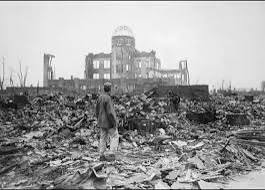
Hiroshima on Wednesday commemorated the 80th anniversary of the U.S. atomic bombing that devastated the city in 1945, with survivors voicing deep concerns over increasing global support for nuclear weapons as deterrence.
The solemn ceremony at the Peace Memorial Park drew around 55,000 attendees, including delegations from 120 countries, among them Russia and Belarus. At exactly 8:15 a.m.—the moment the U.S. dropped the bomb—a bell tolled as the crowd observed a minute of silence.
Survivors, known as hibakusha, are aging rapidly, with their average age now above 86. Many fear their memories and calls for nuclear abolition may soon be lost.
“There will be nobody left to pass on this sad and painful experience in 10 or 20 years,” said 94-year-old survivor Minoru Suzuto, after praying at the cenotaph. “That’s why I want to share my story as much as I can.”
The 1945 bombing of Hiroshima killed an estimated 140,000 people. A second bomb dropped on Nagasaki three days later claimed 70,000 more lives. Japan surrendered shortly after, ending World War II.
Global Concerns Over Nuclear Armament
Hiroshima Mayor Kazumi Matsui, in his address, criticized the growing international acceptance of military buildups and nuclear deterrence, citing ongoing conflicts like the Russia-Ukraine war and unrest in the Middle East.
“These developments flagrantly disregard the lessons the international community should have learned from history’s tragedies,” he warned. “They threaten to topple peacebuilding frameworks painstakingly constructed over decades.”
Matsui urged younger generations to reject “misguided policies” that could lead to catastrophic consequences.
Echoing his concerns, Nihon Hidankyo, a grassroots survivors’ group and recent Nobel Peace Prize laureate, stressed the urgency of changing the stance of nuclear-armed nations. “We face a greater nuclear threat than ever,” the group said.
Dignitaries Pay Tribute
Japanese Prime Minister Shigeru Ishiba, Mayor Matsui, and other officials laid wreaths at the memorial. White doves, symbolizing peace, were released after the mayor’s speech.
In a statement delivered by UN disarmament chief Izumi Nakamitsu, UN Secretary-General António Guterres emphasized the need to remember Hiroshima’s tragedy to protect future generations. “Remembering the past is about building peace today and in the future,” he said.
As dawn broke, many families visited the Peace Memorial Park to honor loved ones lost in the bombing. Among them was 74-year-old Kazuo Miyoshi, who lost his grandfather and cousins. “We do not need nuclear weapons,” he said.
Protests and Reflections
Nearby, over 200 protesters gathered outside the Atomic Bomb Dome under tight security, chanting slogans and holding placards such as “No Nuke, Stop War” and “Free Gaza! No more genocide.” Two individuals were arrested for allegedly assaulting security personnel.
Meanwhile, some survivors expressed anger over global attitudes toward nuclear weapons. Many condemned a recent remark by former U.S. President Donald Trump, who likened the Hiroshima bombing to the June 2025 U.S. attack on Iran.
“It’s ridiculous,” said Kosei Mito, 79, a survivor exposed to radiation in utero. “As long as such actions are justified, I don’t think we can ever eliminate nuclear weapons.”
Pope Leo XIV, from the Vatican, also sent a message of prayer, calling the Hiroshima bombing “a universal warning against the devastation caused by war, especially nuclear warfare.”
Japan’s Nuclear Policy Draws Criticism
Despite survivor pleas, Japan has refused to sign the Treaty on the Prohibition of Nuclear Weapons, citing reliance on the U.S. nuclear umbrella. Prime Minister Ishiba reaffirmed Japan’s commitment to a nuclear-free world but defended the need for deterrence, citing threats from nuclear-armed neighbors.
At a news conference, he said the policy does not contradict Japan’s non-nuclear principles and its aspirations for global disarmament.
Many survivors, however, see this stance as contradictory. They have long demanded recognition and compensation for civilian victims, and acknowledgment from the U.S. government for the civilian casualties caused by the bombings—requests that remain unmet.
As the world reflects on Hiroshima’s tragic past, survivors and peace advocates continue to call for urgent action against the spread and normalization of nuclear weapons.