

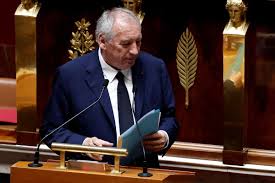
French Prime Minister François Bayrou was ousted on Monday after losing a confidence vote in parliament, plunging the country into fresh political crisis amid mounting economic and geopolitical pressures.
Lawmakers voted 364 to 194 against Bayrou after he tied his survival to approval of a controversial €44 billion ($51 billion) savings plan, which included scrapping two public holidays and freezing government spending. His removal comes just nine months into office and less than a year after his predecessor, Michel Barnier, was also forced out by a no-confidence vote.
The setback leaves President Emmanuel Macron scrambling for options. Financial markets reacted sharply, with yields on French government bonds climbing above those of Spain, Portugal, and Greece. Analysts warn that a potential sovereign debt downgrade later this week could further damage France’s standing in Europe.
“You have the power to bring down the government, but you do not have the power to erase reality,” Bayrou told lawmakers before the vote, warning of rising expenses and mounting debt.
The political instability stems from Macron’s decision last year to call a snap election after strong gains by Marine Le Pen’s far-right National Rally in the 2024 European Parliament polls. His party lost seats to both the far right and far left, leaving a fragmented parliament where centrist prime ministers have repeatedly failed to hold power.
Attention has now shifted to Macron’s next move. Possible successors include Armed Forces Minister Sébastien Lecornu and Justice Minister Gérald Darmanin, though opposition parties have warned they would block another centrist appointment. Analysts say naming a prime minister from the right or left would likely trigger immediate pushback from rival blocs, leaving Macron with limited room to maneuver.
The political deadlock complicates efforts to address France’s fiscal woes, with the left demanding higher taxes on the wealthy and reversal of corporate tax cuts — measures firmly opposed by conservatives. A recent Elabe poll suggests that if another snap election were called, the National Rally would emerge strongest, followed by the left, with Macron’s centrist bloc trailing in third place.
The far left has called for nationwide protests on Wednesday under the slogan “Bloquons tout” (“Let’s block everything”), while trade unions plan further mobilization on September 18. Observers warn that growing public anger, combined with international tensions in Ukraine and the Middle East, could deepen France’s instability at a critical time for Europe.