

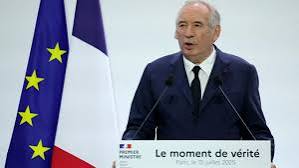
French Prime Minister François Bayrou has announced a sweeping austerity plan aimed at curbing the country’s growing fiscal deficit, including a controversial proposal to eliminate two public holidays.
The €43.8 billion ($50.88 billion) cost-cutting package, unveiled on Tuesday, comes as Bayrou’s minority government battles mounting pressure from opposition parties and risks a potential collapse.
“Everyone will have to contribute to the effort,” Bayrou said, outlining key measures such as freezing non-defence public spending in 2026 and reducing the size of the civil service by not replacing one in every three retiring workers.
Appointed by President Emmanuel Macron to restore fiscal discipline after last year’s snap legislative election produced a deadlocked parliament, Bayrou has positioned himself as a firm advocate for reform. He warned that without urgent action, France could face a financial crisis similar to that of Greece.
“It’s the last stop before the cliff, before we are crushed by the debt,” he told lawmakers and cabinet members, calling for a cultural shift away from what he described as France’s addiction to public spending.
While defence spending will continue to rise, other sectors will bear the brunt of the austerity push. The plan includes freezing pensions at 2025 levels, capping welfare and healthcare expenditures, and possibly scrapping two public holidays—reportedly Easter Monday and May 8, which marks the end of World War II in Europe.
Bayrou now faces the uphill task of securing parliamentary support for the measures. Failure to do so could trigger a no-confidence vote, like the one that ousted his predecessor over the 2025 budget.
With France’s interest payments expected to exceed €60 billion and become the largest burden on the national budget, analysts warn that political instability could lead to further credit rating downgrades and higher borrowing costs.
A formal no-confidence motion is anticipated after the detailed budget bill is presented to parliament in October.