


Chinese manufacturers are cutting wages, shortening shifts, and sending workers on unpaid leave as they struggle with U.S. tariffs, industrial overcapacity, and shrinking markets.
In Foshan, southern China, kitchen cabinet maker Cartia Global Manufacturing is aiming to cut wage costs by 30% to stay competitive. Owner Mike Chai, 53, said steep U.S. tariffs have driven many Chinese rivals out of the American market, prompting them to target his long-time customers in Australia.
Since the pandemic, Chai has halved his workforce to 100, but with no further room for layoffs, he is reducing overtime and asking staff to take unpaid leave — which he calls a “lifeline” for survival. “Our company barely breaks even,” he said. “You’ve worked here for 10–15 years, let’s do it together.”
While China’s official unemployment rate remains around 5%, economists warn that underemployment is worsening. U.S. President Donald Trump raised tariffs on Chinese imports by 30 percentage points this year, but Washington and Beijing agreed Monday to extend a 90-day truce, preventing levies from returning to triple-digit levels.
Natixis chief Asia-Pacific economist Alicia Garcia-Herrero said the trade war’s hidden toll is falling on workers. “They will not become unemployed, but they will get unpaid leave or work fewer hours,” she noted, warning of a “spiral” of falling prices, cost cuts, and wage reductions.
Chai’s factory is now running at half capacity after losing two key Australian clients to lower-priced competitors. He plans to cut prices by 10%, slashing overtime from 28 days a month to just 10. With overtime previously making up more than a third of pay, average monthly wages have dropped to about 5,000 yuan (£540) before overtime.
Other factory owners are turning to temporary contracts to cut costs. Dave Fong, who runs three plants making school bags, climbing gear, and machinery, laid off 30 full-time workers at one factory and rehired some on short-term deals to avoid paying pensions or insurance.
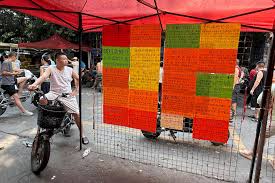
Recruiters say hourly wages for temporary workers are falling. In Wuhan, agent Chen Chuyan reported rates dropping from 16 yuan last year to 14 yuan today. Demand is low despite long queues for interviews.
For many workers, the downturn is hitting hard. In Guangzhou’s Datang village, garment worker Alan Zhang, 30, said his daily wage has halved from 400 yuan in 2021, and he worked just 14 days in July. He fears he may not be able to raise the 10,000 yuan needed annually for his son’s kindergarten fees.
Economists warn the squeeze on manufacturing wages could put broader deflationary pressure on China’s economy, especially in lower-skilled sectors like textiles, furniture, and basic electronics.
In Shenzhen’s Longhua job market, factory roles offering 17–28 yuan an hour draw dozens of applicants. Some complain of hidden deductions that lower actual pay, while others, like 46-year-old Huang from Yunnan, say they have spent days job-hunting only to face upfront fees or poor offers.
“I had one interview this morning but they asked for 80 yuan just to get in,” Huang said, pulling a small suitcase. “So I bought food instead.”