

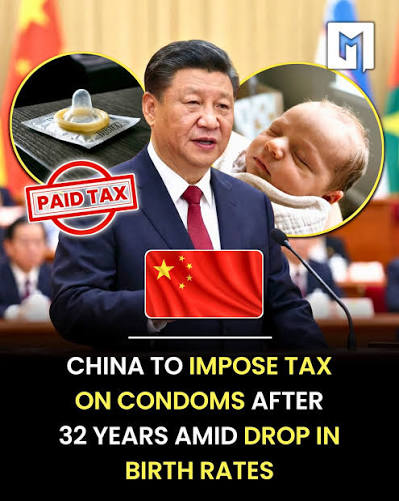
China has begun charging a 13% value-added tax (VAT) on contraceptive drugs and devices, ending a three-decade exemption, as the government seeks to address the country’s declining birth rate.
Effective January 1, condoms and contraceptive pills are now taxed at the standard VAT rate applied to most consumer goods, according to Reuters. The policy marks a new approach by Beijing to influence population trends in the world’s second-largest economy.
The move comes as China records its third consecutive year of population decline in 2024, raising concerns about long-term economic and social impacts. Experts warn that without intervention, the downward trend in births is expected to continue.
In recent years, authorities have introduced a range of “fertility-friendly” measures, including tax exemptions on childcare subsidies and the rollout of annual financial support for families. The government has also encouraged universities to provide “love education” programs aimed at promoting marriage, family, and childbearing in a positive light.
At the annual Central Economic Work Conference last month, top leaders pledged renewed efforts to promote “positive marriage and childbearing attitudes” to help stabilise the nation’s birth rate.
China’s declining fertility has been shaped by the legacy of the one-child policy (1980–2015), rapid urbanisation, high childcare and education costs, job uncertainty, and a slowing economy, all of which have discouraged young people from marrying and starting families.