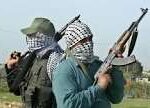



A United States congressman, Riley Moore, has raised alarm over what he described as escalating attacks on Christian communities in Nigeria, citing threats by the Islamic State (ISIS) demanding conversion or death.
Moore, a Republican representing West Virginia, spoke during an interview on Newsmax TV, excerpts of which he shared on his X account on Monday. He said he travelled to Nigeria in December as part of a congressional delegation mandated to assess the country’s security situation and humanitarian needs.
According to him, the delegation visited internally displaced persons (IDP) camps, where they met victims of violent attacks. Moore described the accounts he heard as “heartbreaking,” recounting testimonies from women and families who witnessed the killing of their children and relatives.
He alleged that ISIS had issued a statement targeting Christians in Nigeria, ordering them to convert to Islam or face death, or live under what the group described as a caliphate. Moore said the threat points to what he considers a deliberate and targeted campaign against Christian communities.
“We cannot stand by and allow the slaughter of Christians to continue in Nigeria,” Moore said, adding that the violence was not random but amounted to persecution.
The lawmaker stated that the Nigerian government was working closely with the United States to counter extremist groups, including ISIS-linked factions and Islamist militants operating in the Middle Belt. He said security cooperation between both countries had intensified in recent months.
Moore also claimed that U.S. military support, including a strike he said involved Tomahawk cruise missiles around the Christmas period, helped deter attacks during the holidays. He asserted that, for the first time in two years, there were no mass killings of Christians during Christmas, though details of the alleged military action have not been independently confirmed.
He further disclosed that discussions were ongoing to establish a broader U.S.–Nigeria strategic security framework aimed at strengthening Nigeria’s military capacity, intelligence sharing, and counterterrorism efforts.
Rejecting arguments that the violence is primarily driven by climate change or farmer-herder conflicts, Moore questioned why churches and IDP camps were being attacked if religion was not a factor. He acknowledged that Nigerians of different backgrounds have been affected but insisted that Christian communities were being specifically targeted.
Nigeria has for years battled widespread insecurity linked to Boko Haram, Islamic State West Africa Province (ISWAP), and other armed groups, leading to thousands of deaths and mass displacement. While analysts point to a mix of religious extremism, ethnic tensions, economic hardship, and governance challenges as drivers of the violence, Moore said his conclusions were based on firsthand observations during his visit.
“What is happening in Nigeria is Christian persecution,” he said.