

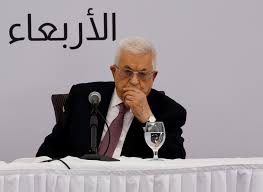
The United States has barred Palestinian President Mahmoud Abbas from attending next month’s United Nations General Assembly (UNGA) in New York after revoking visas issued to him and about 80 other Palestinian officials.
US Secretary of State Marco Rubio announced the move on Friday, accusing Abbas and his delegation of undermining peace efforts by pursuing unilateral recognition of a Palestinian state and continuing legal cases against Israel at international courts. He said Palestinian leaders must first renounce terrorism and incitement before being treated as partners for peace.
The decision, welcomed by Israel, breaks with the usual US role of facilitating access for international delegations to UN headquarters. It comes as France, alongside the UK, Canada, and Australia, is pushing for formal recognition of a Palestinian state at the upcoming session—a move the Trump administration strongly opposes.
Abbas’ office condemned the visa revocations, calling them a violation of international law and the UN Headquarters Agreement, which obliges the US to allow access to all delegations “irrespective of relations” with Washington. Palestinian officials urged the decision to be reversed.
Israel’s Foreign Minister Gideon Saar praised the move, while Prime Minister Benjamin Netanyahu reiterated his rejection of a two-state solution, arguing that recognising a Palestinian state would reward Hamas.
The United Nations said it is in discussions with Washington and stressed the importance of ensuring that all member states and observers can be represented at the General Assembly, especially amid renewed international debate over a two-state solution.
Palestine currently holds non-member observer state status at the UN and is recognised by 147 of the organisation’s 193 member states. However, the lack of defined borders, continued Israeli settlement expansion, and the war in Gaza mean recognition is unlikely to alter realities on the ground.