

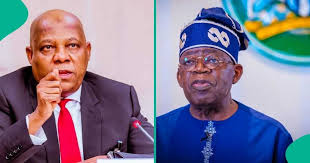
The Presidency on Friday dismissed media speculation suggesting a rift between President Bola Tinubu and Vice President Kashim Shettima over the six-month suspension of Rivers State Governor Siminalayi Fubara earlier this year.
In a statement released by Stanley Nkwocha, Senior Special Assistant to the President on Media and Communications (Office of the Vice President), the Presidency clarified that Shettima’s recent remarks at a public event in Abuja were being misrepresented by some online platforms to falsely imply disagreement with Tinubu’s handling of the political crisis in Rivers State.
The statement emphasized that the Vice President’s comments—made during the launch of former Attorney-General Mohammed Bello Adoke’s book “OPL 245: The Inside Story of the $1.3 Billion Oil Block”—were strictly historical in nature and unrelated to current political developments.
“Shettima’s remarks referenced events during the Goodluck Jonathan administration, particularly efforts to remove him from office as Borno State governor during the Boko Haram insurgency. The Vice President’s intention was to acknowledge Adoke’s role during that period and highlight Nigeria’s constitutional journey—not to criticize current presidential decisions,” Nkwocha said.
The Presidency condemned what it described as “reckless misrepresentation” of Shettima’s speech by certain media outlets seeking to create division within the administration. It reaffirmed that President Tinubu acted within the bounds of the 1999 Constitution (as amended) when he declared a state of emergency and suspended Governor Fubara in March.
“To be clear, President Tinubu did not remove Governor Fubara from office. He was suspended in accordance with constitutional provisions, in response to an unprecedented political crisis in Rivers State,” the statement said.
According to the Presidency, the intervention was necessary after the State House of Assembly complex was demolished and the Governor faced a credible threat of impeachment by lawmakers. The situation, it argued, met the constitutional threshold outlined in Section 305(3)(c) of the Nigerian Constitution, which allows for extraordinary measures when public order and safety are under threat.
The statement continued: “President Tinubu’s proclamation under Section 305(2) was ratified by a bipartisan majority in the National Assembly. The cross-party support reflected a consensus that immediate federal intervention was required to restore governance and prevent further instability.”
Contrasting the Rivers crisis with the insurgency in the North-East under the Jonathan administration, the Presidency noted that while the former involved political and institutional breakdown, the latter was a case of armed rebellion by non-state actors—a distinction it said made comparisons between the two situations misleading.
The statement further emphasized that Shettima’s remarks were a tribute to the professional conduct of Adoke and the constitutional checks that define Nigeria’s democracy.
“Shettima spoke extemporaneously, highlighting the importance of accountability in governance and the legacy of public service. His comments have been wrongly twisted to suggest disloyalty to President Tinubu, which could not be further from the truth,” the statement noted.
It concluded with a call for responsible journalism and political maturity, urging media outlets and commentators to avoid sensationalism and context-stripping that could undermine national unity.
“Vice President Shettima remains firmly aligned with President Tinubu in defending democratic institutions and upholding constitutional order. The administration stands united behind every action taken to preserve peace and stability in the country.”