

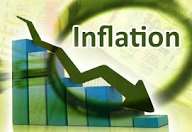
The National Bureau of Statistics (NBS) on Monday reported that Nigeria’s inflation rate slowed to 20.12 percent in August, down from 21.88 percent in July.
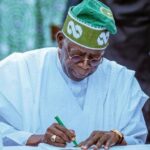
The development coincided with the suspension of the four percent Free on Board (FOB) charge recently introduced by the Nigeria Customs Service on all imported goods. The suspension was ordered by the Minister of Finance and Coordinating Minister of the Economy, Wale Edun, in a letter dated September 15, 2025, and addressed to the Comptroller-General of Customs.
Edun explained that the decision followed consultations with industry stakeholders and trade experts, noting that the levy posed significant challenges to trade facilitation, economic stability, and inflation control. He said many businesses had raised concerns about the financial burden of the charge, which could harm competitiveness and worsen the business climate.
The minister directed strict compliance with the suspension, stating that the pause would allow for broader stakeholder engagement and a review of the levy’s framework.
Meanwhile, NBS attributed the decline in inflation to moderation in food and energy prices. Year-on-year, headline inflation dropped to 12.03 percent from 32.15 percent in August 2024. Month-on-month, inflation slowed to 0.74 percent compared to 1.99 percent in July.
Food inflation eased to 21.87 percent year-on-year, down from 37.52 percent in August 2024, with notable reductions in the prices of rice, maize flour, millet, semolina, and soya milk. Core inflation, which excludes food and energy, also fell to 20.33 percent from 27.58 percent a year earlier.
At the state level, Ekiti (28.17 percent), Kano (27.27 percent), and Oyo (26.58 percent) recorded the highest year-on-year inflation, while Zamfara (11.82 percent), Anambra (14.16 percent), and Enugu (14.20 percent) posted the lowest.
Food inflation was highest in Borno (36.67 percent), Kano (30.44 percent), and Akwa Ibom (29.85 percent), while Zamfara (3.30 percent), Yobe (3.60 percent), and Sokoto (6.34 percent) recorded the slowest increases.
The Customs Service had earlier suspended the FOB levy in February following stakeholder pushback but maintained that it was designed to sustainably fund modernisation initiatives. The latest directive, however, effectively halts its implementation.