

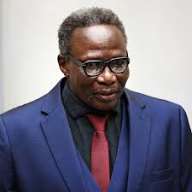
The International Criminal Court (ICC) on Monday delivered a historic verdict convicting former Janjaweed militia leader Ali Muhammad Ali Abd-Al-Rahman, popularly known as Ali Kushayb, of 27 counts of war crimes and crimes against humanity over atrocities committed in Sudan’s Darfur region more than 20 years ago.
The charges against Kushayb included murder, rape, persecution, and forced displacement, carried out during a brutal campaign against non-Arab communities in Darfur between 2003 and 2004. His sentencing will be determined at a later date following additional proceedings at The Hague.
This marks the first conviction linked to the Darfur conflict since the United Nations Security Council referred the case to the ICC in 2005, representing a major milestone for international justice.
Delivering the judgment, Presiding Judge Joanna Korner said the court unanimously found Kushayb guilty on all counts, dismissing his claims of mistaken identity.
“He encouraged and gave instructions that resulted in the killings, rapes, and destruction committed by the Janjaweed,” Korner stated. “He ordered his forces to wipe out non-Arab tribes, saying, ‘Don’t leave anyone behind. Bring no one alive.’”
The Darfur conflict erupted in 2003 when non-Arab rebel groups accused the Sudanese government of marginalization. In response, Khartoum armed the Janjaweed militias, unleashing widespread violence that the United States and rights groups later described as genocide.
For victims, the verdict represents long-awaited justice.
“This ruling is a victory for us and for justice,” said Jamal Abdallah, 32, a survivor displaced from West Darfur. “For 22 years, we’ve lived as refugees because of his crimes.”
UN Human Rights Chief Volker Türk hailed the ruling as “an important acknowledgment of the enormous suffering endured by victims” and “a first measure of long-overdue redress.”
In Kalma Camp, South Darfur, displaced residents watched the verdict via a live stream. “We have been waiting for more than 20 years for this day,” said an elderly man. “We hope there will be reparations for what we lost.”
Despite the conviction, several ICC warrants remain unexecuted against top Sudanese figures, including former President Omar al-Bashir and ex-Defence Minister Abdelrahim Mohamed Hussein, both accused of genocide and reportedly detained by Sudan’s military. Another fugitive, Ahmed Haroun, escaped prison earlier this year and has dismissed the ICC as a “colonialist institution.”
The ruling comes as Sudan is again mired in war between the Sudanese Armed Forces (SAF) and the Rapid Support Forces (RSF) — a group with roots in the Janjaweed militia. The renewed violence, which began in April 2023, has triggered ethnically driven killings and what the UN calls the world’s worst humanitarian crisis.
“The same people who were there in the 2000s are in the RSF now,” Abdallah said. “The reason they repeat their crimes is lack of accountability.”
Victims and rights advocates hope the ICC’s ruling will mark the beginning of true justice for Darfur and a global warning that impunity for war crimes will no longer go unpunished.