

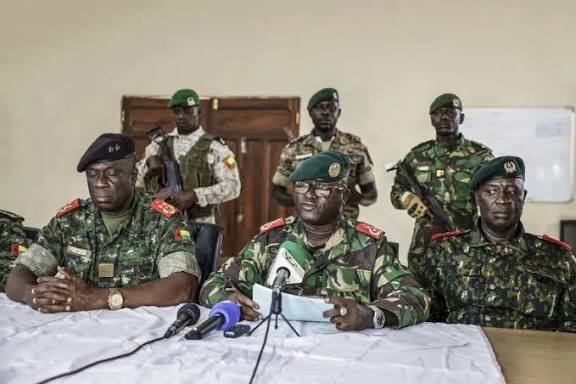
Military officers in Guinea-Bissau on Wednesday announced they had taken full control of the country, suspending the electoral process and closing national borders, three days after presidential and legislative elections were held.
Gunfire was earlier heard near the presidential palace in Bissau as armed soldiers blocked the main road leading to the building, heightening fears in the coup-prone West African nation.
Brigadier General Denis N’Canha, head of the presidential military office, said a unified military command comprising all branches of the armed forces would assume leadership “until further notice.” Flanked by armed soldiers, he told journalists that the intervention followed the discovery of an alleged plan involving “national drug lords” to destabilise the country and introduce weapons to undermine constitutional order.
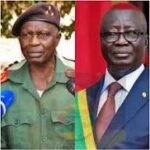
It was unclear whether President Umaro Sissoco Embalo, who was favoured to win the election, had been detained. A senior military officer told AFP that Embalo was inside a building behind military headquarters with the chief of staff and the interior minister, but his status could not be independently confirmed. Both Embalo and opposition candidate Fernando Dias had previously claimed victory ahead of provisional results expected Thursday.
The military announced the suspension of all media programming and imposed a nationwide curfew. The National Electoral Commission (CNE) also came under attack on Wednesday by unidentified armed men, according to an electoral official.
Guinea-Bissau, one of the world’s poorest countries, has a long history of political instability, including four successful coups and several attempted ones since independence. It is also a major transit point for cocaine trafficking from Latin America to Europe.
More than 6,700 security personnel, including ECOWAS stabilisation forces, had been deployed for the election. The vote took place without the participation of the main opposition party, PAIGC, and its leader Domingos Simões Pereira, whose candidacies were rejected by the Supreme Court over late submissions—an action the opposition described as political manipulation.
Embalo dissolved the opposition-controlled parliament in 2023 and has ruled by decree since then. The opposition maintains that his mandate expired in February 2024.