

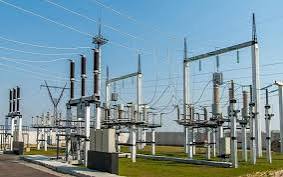
Electricity Generation Companies (Gencos) have raised alarm over escalating debts owed to them, which have now reached an estimated ₦5.2 trillion as of the first half of 2025. The figure includes ₦1.2 trillion accumulated in H1 2025 alone, ₦2 trillion in legacy debts dating from 2015 to 2024, and an additional ₦2 trillion owed by the federal government for 2024.
In a statement issued on Monday by Dr. Joy Ogaji, Executive Secretary of the Association of Power Generation Companies (APGC), the Gencos expressed deep concern over what they described as “unsustainable” financial pressure on the industry, warning that the situation requires urgent intervention at the Presidency level.
The statement was in response to reports that the federal government may absorb the cost of newly announced subsidies granted by the Enugu Electricity Regulatory Commission (EERC), which recently slashed electricity tariffs from ₦209 to ₦160 per kilowatt hour. The Gencos argued that such a move could set a dangerous national precedent, especially as only ₦45 of the ₦112 captured in EERC’s tariff order accounts for actual generation costs.
“There is no federal policy on electricity subsidies. What we’re witnessing is debt accumulation disguised as subsidy,” Ogaji said.
According to her, while Gencos submit monthly generation invoices averaging ₦250 billion, the federal government’s total electricity sector allocation for 2025 stands at only ₦900 billion, which, she noted, is not even cash-backed to date.
Ogaji described the funding gap as a “contagion” threatening the survival of Gencos, whose electricity is fully consumed but not fully paid for. She further lamented that, despite consistently meeting and exceeding their generation targets, Gencos have never received full payments, never enjoyed guaranteed gas supply, and never been insulated from grid inefficiencies.
Additional challenges include exposure to foreign exchange volatility, with over 90% of operational costs incurred in U.S. dollars, as well as increased machine wear due to unstable grid operations.
Currently, over 50% of Gencos’ available capacity is not utilized due to inefficiencies in the transmission and distribution subsectors, leading to frequent power rejections and forced load reductions.
Ogaji recalled that at the launch of the Transitional Electricity Market (TEM) in 2015, there were assurances that Gencos would be fully paid via security deposits from Distribution Companies (Discos) to cover any payment shortfalls. However, she noted that such guarantees from Discos or the Nigerian Bulk Electricity Trading Plc (NBET) have not materialised, undermining the sector’s financial health.
She warned that the situation has deterred further investments in generation capacity, even as Gencos continue to shoulder risks such as unutilized declared capacity, contract breaches, grid instability, bank pressure, and community unrest.
“The Gencos have made significant investments as responsible corporate citizens and continue to meet their obligations under industry agreements. But if urgent action is not taken, the survival of the entire power value chain—and by extension, the Nigerian economy—is at stake,” she concluded.